

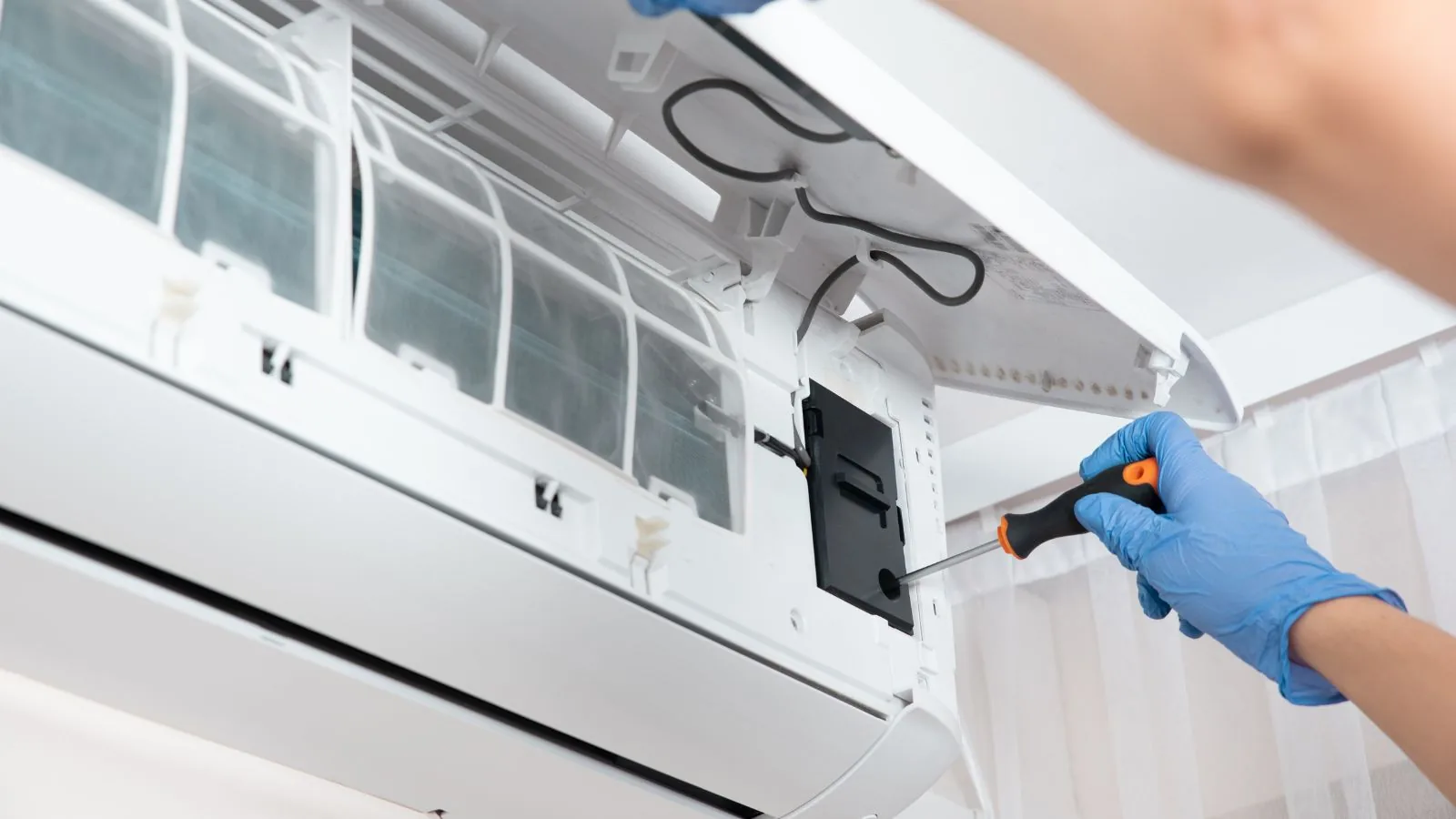
Air conditioners remove moisture from the air as they cool, and that water has to drain somewhere. When the condensate line clogs or the drain pan cracks, the water goes into whatever is below or beside the unit. Callers often describe a wet spot in a closet, a ceiling stain beneath an attic air handler or a hardwood floor that started to cup near a closet.
This page is about the water damage, not the air conditioner. An HVAC technician clears the line, replaces the pan or repairs the unit. Restoration dries what the water reached and repairs the damaged materials. If the water is active, switch the system off at the thermostat so it stops producing more.
Where AC leak water usually shows up
Closets with an air handler
Water from a clogged drain line pools under the unit and soaks carpet, pad and the lower drywall.
Ceilings below an attic unit
A cracked secondary pan lets condensate drip through insulation and onto the ceiling.
Walls beside a ductwork run
Condensation on cold ducts can drip onto drywall and leave a stain along a seam.
Floors near a mini split or window unit
Drainage that is aimed wrong can run down a wall and wet the baseboard and floor.
How to tell a condensate leak from a plumbing leak
Condensate leaks follow the cooling cycle. The wet spot gets bigger on hot days when the system runs more, and it stops when the unit is off. Plumbing leaks often keep going regardless. A damp closet floor with no plumbing nearby, a rusty pan under the unit or a musty smell near the air handler are all common signs.
If you cannot tell, a moisture reading helps. The restoration crew maps where the water went, and an HVAC technician confirms the source. In both cases, shut the system off until the line and pan are checked.
Wet spot near your AC unit?
Turn the system off, then call to describe it.
What cleanup involves for an AC leak
Condensate is relatively clean water but can carry algae and dust from the coil and pan, so it is handled as Category 1 or 2 depending on how long it sat. The first step is extraction if water is standing, then lifting wet carpet or pad if they cannot be dried in place.
Drywall near the unit is checked at the base, where water wicks upward. Wet insulation is removed. Air movers and a dehumidifier then dry the space. Because mold needs moisture, drying quickly in the first day or two lowers that risk. See mold remediation if you already see growth, and ceiling water damage repair if water came through a ceiling.
When wet carpet and pad can stay
| Condition | Usual outcome | Why |
|---|---|---|
| Recent leak, carpet wet but clean | Often dried in place | Clean or lightly contaminated water that has not sat |
| Leak ran for days | Pad often removed | The pad holds water and is hard to dry |
| Visible growth or odor | Remove affected material | Mold needs moisture and the pad stays wet |
| Wet hardwood near the closet | Dry and monitor for cupping | See wood floor water damage repair |
AC leak water damage cost factors
How long the line was clogged
A short leak wets less than one that dripped for weeks.
Unit location
An attic, a closet and a basement unit each wet different materials.
Materials below the unit
Carpet, pad, hardwood and drywall each have different drying needs.
Insulation and framing
Wet attic insulation is usually removed and replaced.
HVAC repair
The condensate line and pan repair is an HVAC cost, separate from water damage work.
A sudden failure and a condensate line that dripped unnoticed for weeks can land on opposite sides of a policy exclusion. Your agent can tell you which side yours falls on. Call (833) 521-1033 to get an actual number for drying and repair.
For wet insulation and ceiling material, restoration crews work from the ANSI/IICRC S500 water damage standard, which also governs how drying is documented.
AC Leak Water Damage Questions
Is there a wet spot in my closet from the AC?
If the closet holds an air handler and the floor is wet on hot days, the condensate line or pan is a likely cause. Turn the system off, and have an HVAC technician check the drain.
Can an AC leak cause mold?
Moisture is what mold needs, so a long-running condensate leak creates the conditions for growth. Drying early reduces that risk, and you should ask a physician about any health concern.
Do you repair the AC unit?
No. An HVAC technician repairs the unit. This service covers drying and repairing the water damage.
Will the ceiling stain from my attic unit go away on its own?
The stain is permanent until it is sealed and painted, and the wet insulation and drywall must dry first. Fix the drain, dry the ceiling and then repair it.