

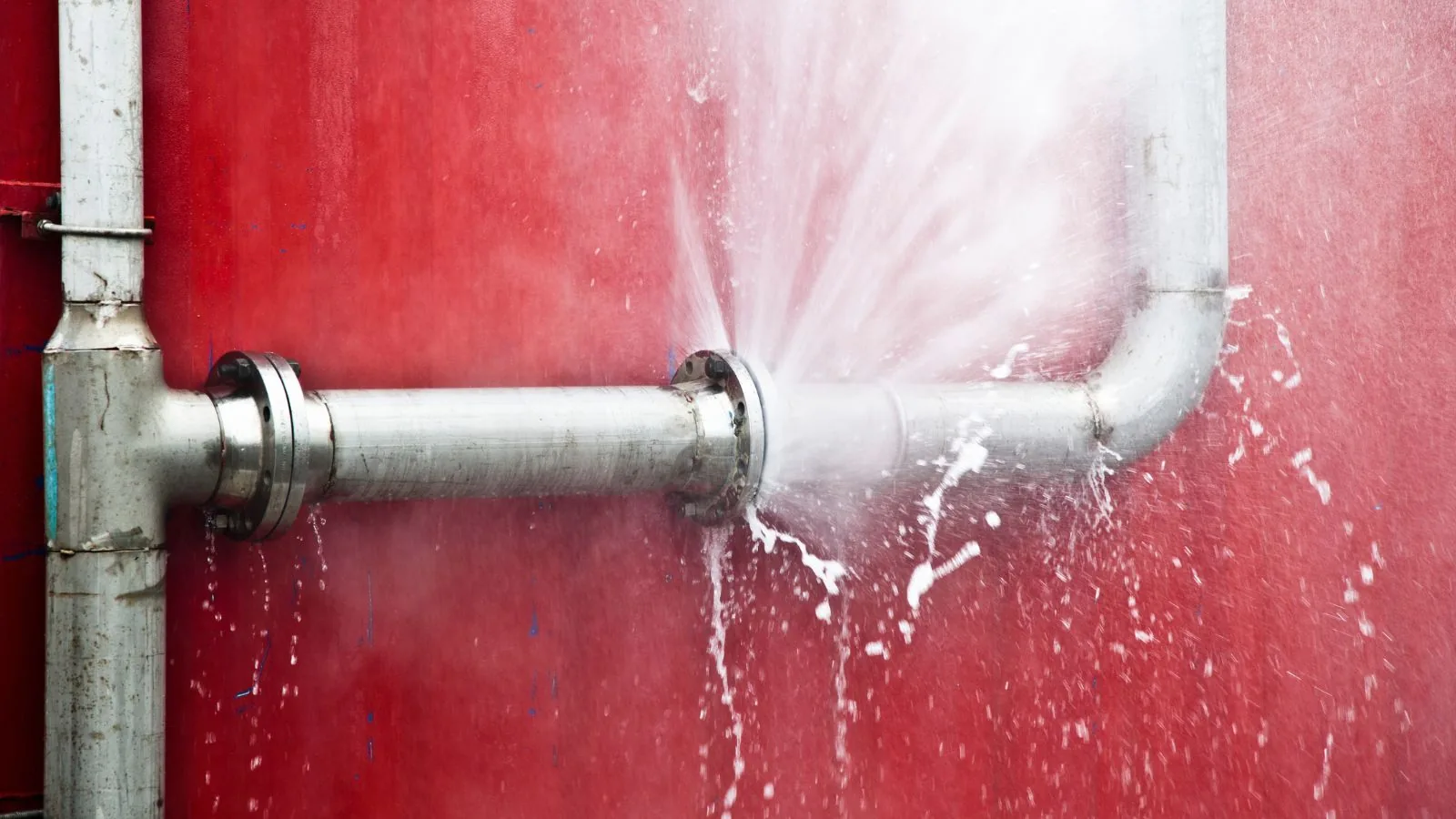
A burst pipe is different from a slow drip because the water behind it is under pressure. Supply lines push water out at a steady rate until someone closes a valve, which is why a pipe under a sink or inside a wall can put water across a kitchen floor and into the room below. If this is happening in your Mentor home now, the first move is the main shut-off, and the second is the 24/7 line.
This page is about the supply side, meaning the lines that carry pressurized water into the house. Drain and sewer failures are a different problem and are covered under cleanup after a sewage backup. A pipe that failed after a hard freeze has its own page at frozen pipe water damage.
Burst pipe emergency: what to do first
Do these in order, and only the steps that are safe for you to reach.
- Close the main shut-off valve. Most homes have it where the water line enters the house, often near the meter or the water heater.
- Crack a tap at the bottom of the house so pressure bleeds out of the lines.
- If the water is near outlets or the panel, stay out, and for sparking or a burning smell phone 911 or the electric utility.
- Move rugs, shoes, electronics and small furniture off the wet floor.
- Take photos and a short video of the water and the damaged area before anything is moved.
- Call the 24/7 line and say where the water is going, including the room below.
Never touch the panel with wet hands or wet feet
Shut off power to wet rooms only if you can reach the breaker panel without stepping in water. If you cannot, leave it and call the utility. Water and live circuits do not mix.
Where burst pipes leave damage in a home
Under sinks and behind cabinets
A failed supply line or fitting soaks cabinet bases and flooring, and the damage often shows first in the room below.
Inside walls
A split pipe in a wall cavity wets insulation and drywall from the inside, so the surface can look fine for a while.
Above ceilings
Water travels along joists before it drops, so the stain on the ceiling is rarely directly under the break.
Utility rooms and basements
Water heater lines, laundry hookups and exposed copper or plastic lines can all fail near finished space.
Pipe still running?
Close the main valve, then call the 24/7 line.
What Mentor's housing history means for supply lines
The city's history timeline shows Mentor growing from 8,492 people in 1950 to 39,912 in 1970 during a postwar housing boom. A lot of homes were built in those decades, and plumbing from that era may have been repaired or replaced several times since. That mix is the reason assessments look at what is actually behind the wall instead of assuming a material.
If you know when your plumbing was last updated, mention it on the call. If not, a plumber can identify the pipe type once the water is stopped. Restoration handles the water damage, and the repair of the pipe itself is a plumber's job.
How burst pipe damage is cleaned up
The work starts with extraction of any standing water, then moisture mapping to find where the water went. Moisture meters read wood and drywall, and a thermal camera shows cooler wet areas behind surfaces. Wet insulation and soft drywall are removed when they cannot dry in place, and air movers and dehumidifiers run until the readings return to normal.
Because burst lines carry clean supply water, many burst pipe jobs are Category 1 at the start. That category can change if the water sits long enough to pick up contamination, which is one more reason to call early. Related pages cover kitchen water damage and ceiling water damage repair, which are the two places burst pipe damage most often shows up.
Burst pipe cost factors
How long the pipe ran
A line closed in minutes affects far less material than one that ran overnight.
Rooms and levels reached
Water that reached a lower floor or a finished ceiling adds rooms to the scope.
Wall and ceiling materials
Drywall, plaster, insulation and cabinets respond differently to wetting.
Drying days and equipment count
The number of air movers and dehumidifiers and the days they run set much of the drying cost.
Rebuild after drying
Replacing removed drywall, paint and flooring is a separate scope from mitigation.
A pipe that breaks suddenly is often a covered cause, while a long, slow leak often is not. Keep photos of the split pipe, the standing water and each wet material, and confirm the details with your insurer. To price this loss properly, call (833) 521-1033.
Clean supply water is Category 1 under the ANSI/IICRC S500 standard, and it can be reclassified if it sits on materials too long.
Burst Pipe Water Damage Questions
What if the pipe bursts at 2 a.m.?
The line is staffed around the clock, so an overnight burst is handled like a daytime one. Close the main valve, then call and describe what is wet.
Should I call a plumber or a restoration company first?
Do both. A plumber repairs the pipe, and restoration removes the water and dries the structure. If you cannot shut off the water yourself, a plumber or the water utility may need to close it at the street.
How do I know if water is inside my walls?
Look for stained or bubbling paint, a musty smell, warm or cool spots, and baseboards that are soft. A moisture meter gives a real answer, because wet drywall can look normal for days.
Will my homeowners policy pay for a burst pipe?
It depends on the policy and the cause. Sudden pipe breaks are often covered while gradual leaks often are not. Ask your insurer, and note that this page cannot confirm coverage.