

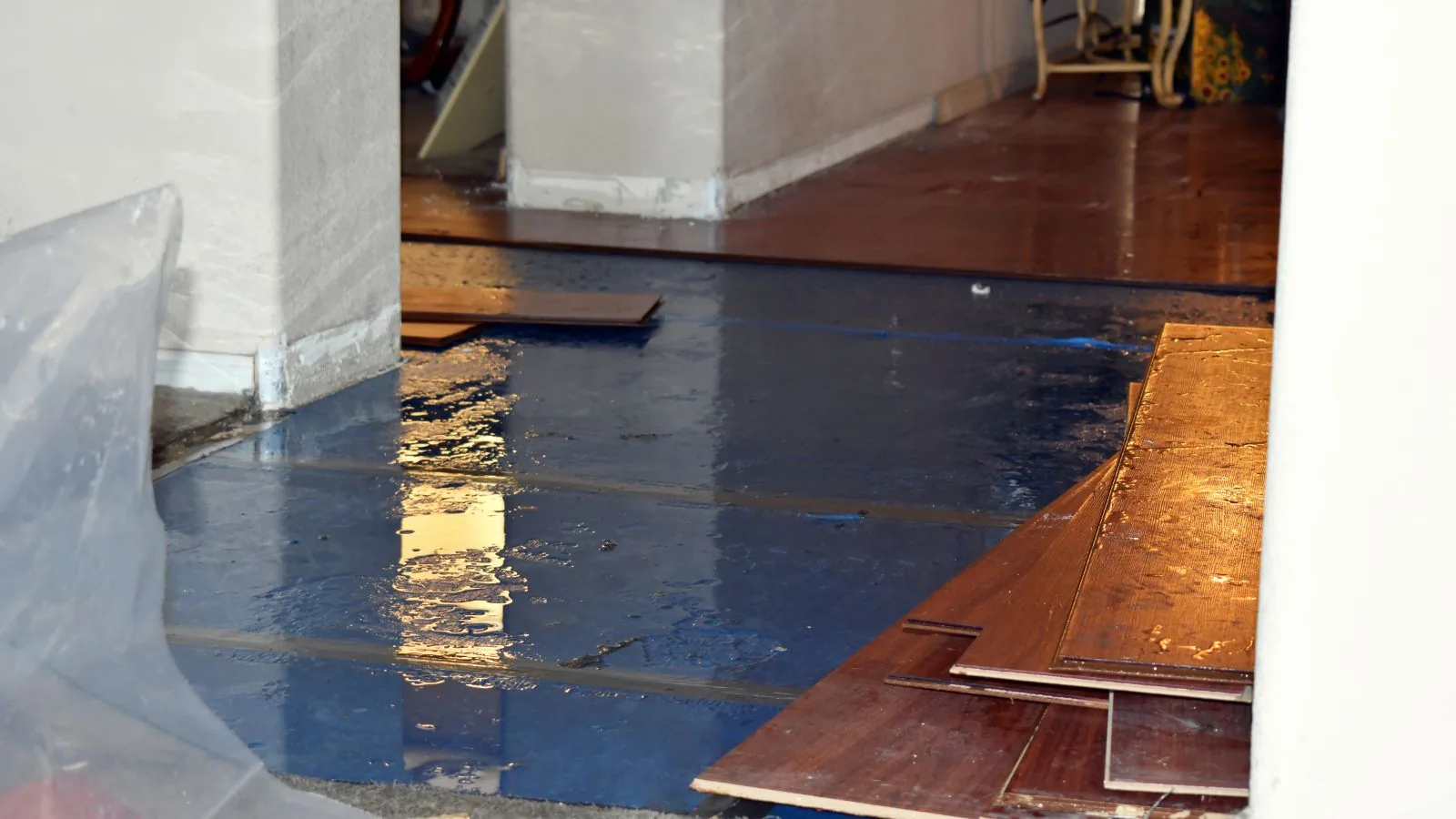
A slab leak is a leak in a pipe that runs under or inside a concrete floor. You cannot see the pipe, so the signs show up elsewhere. People describe a warm patch on the floor, the sound of running water when everything is off, a damp spot on a concrete or tile floor and a water bill that rose with no new use.
This page covers the water damage that follows. Finding and repairing the line is a plumber's job, and many plumbers use leak detection tools for that. Restoration dries the floor, the walls and the materials that got wet, and removes what cannot be saved.
Water coming up through the floor or a warm spot on it?
If a floor feels warm or damp for no visible reason, or you hear water running with every fixture closed, a line under the slab may be leaking. The trade name for the cleanup is slab leak water damage restoration, which means extracting the water at the surface and drying the slab, the flooring and the lower walls. The pipe repair, whether through the slab or by rerouting, is the plumber's part.
Shut off the main water valve first. If the leak is on the supply side, closing the main stops it, and you can confirm by checking whether the meter stops moving.
Slab leak emergency: what to do before help arrives
- Close the main water valve and check the water meter for movement.
- Keep power off to wet floor areas if you can reach the panel dry. Never stand in water to reach it.
- Lift rugs, furniture and boxes off the floor.
- Do not drill or cut into the slab yourself.
- Photograph wet areas, warm spots and the meter reading.
- Call the 24/7 line and describe where the floor is wet or warm.
Hot water lines can scald
A leak in a hot water line under the slab can warm the floor surface and release hot water. Keep children and pets away until the line is shut off and the area is checked.
Water coming up through the floor?
Shut off the main valve and call the 24/7 line.
Do slab leaks apply to Mentor homes?
Whether a given Mentor home has a slab depends on how it was built. Some homes have slab sections, some have basements and some have crawl spaces, and this site does not claim that one type is typical. The Lake County Auditor and your own building plans show how your house was built. If your home has no slab, the rest of this page does not apply, and basement flood cleanup or crawl space water damage may fit better.
Cleanup after a slab leak
The surface water is extracted, and the flooring is checked. Tile and laminate can lift at seams, hardwood cups and carpet and pad soak. Moisture mapping covers the slab itself, where readings stay high longer than in wood. The slab holds moisture and releases it slowly, so dehumidifiers run until readings drop.
Walls next to the leak are checked for wicking, and baseboards are removed if wet. Cabinets near the leak are checked at the base. A crew may recommend removing a flooring layer to dry the slab faster. The decision depends on readings, not guesses.
Slab leak cost factors
Leak location and duration
A leak caught early is smaller than one that ran for weeks under the floor.
Flooring type
Tile, laminate, hardwood and carpet each respond differently.
Slab moisture
Concrete dries slowly, which extends equipment days.
Cabinets and walls reached
Water that wicked into cabinets or drywall adds materials.
Plumbing repair
Leak detection and pipe repair are plumbing costs, separate from drying.
Slab leaks sit in a gray area for many policies, since gradual leaks and plumbing repair are often handled separately from the resulting water damage. Read the relevant wording or ask your agent before the plumber starts. Call (833) 521-1033 and ask what drying the floor would cost.
Once the leak is repaired, drying follows the ANSI/IICRC S500 standard, with readings taken on the flooring and the slab until they reach a dry target.
Slab Leak Water Damage Questions
Can I call after hours about water on a concrete floor?
Yes, calls are taken around the clock. If water is on the floor at night, shut off the main valve and call.
How do I know if I have a slab leak?
Warm spots on the floor, running water sounds with fixtures off, damp flooring or a rising water bill are common signs. A plumber confirms with detection tools.
Does my water bill really tell me anything?
A sudden rise with no change in use can point to a leak somewhere. It does not say where, and a meter check with everything off is more telling.
Do you break the slab to fix the pipe?
No. A plumber repairs or reroutes the line. Restoration handles the water damage and drying.