

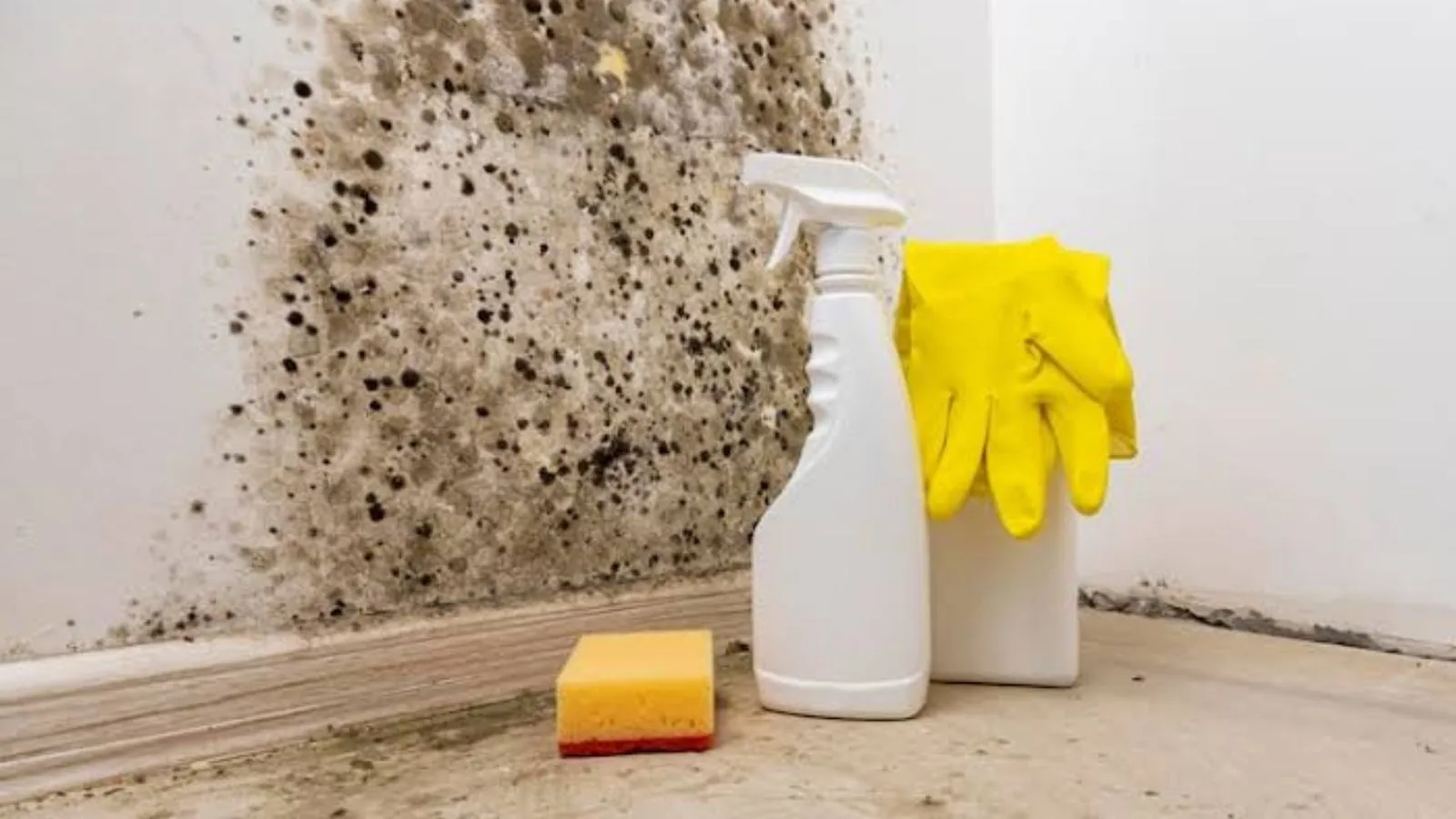
Mold needs moisture, and water damage supplies it. According to the EPA, wet materials can begin to grow mold in as little as a day or two, which is why drying fast matters. When a leak or flood is not dried in time, or when a slow leak runs for weeks, growth can appear on drywall, wood, carpet and insulation.
This page covers mold after water damage, which is the work this company does. It does not diagnose health effects or make health claims. If anyone in the home has a health concern, talk to a physician. For the drying side, see how wet structures are dried.
Seeing dark spots or smelling something musty?
People describe fuzzy or dark patches on a wall, a musty odor in a closet or basement, or discoloration on a ceiling after a leak. People often ask whether it is mold, and the right first step is to find and stop the moisture. Without that step, cleaning will not hold.
The trade name for removing it is mold remediation, and for finding out how much there is, mold inspection or testing. A remediation plan names the affected area, the containment and the removal method.
How mold remediation works
- Find and fix the moisture source, because growth returns where moisture stays.
- Contain the area with plastic sheeting so spores do not travel through the house.
- Use negative air with HEPA filtration to keep the work area under slight negative pressure.
- Remove porous materials that are affected, such as drywall, carpet and insulation, and bag them.
- Clean hard surfaces and framing with HEPA vacuuming and wiping.
- Dry the area fully and confirm readings.
- Verify the result before rebuilding.
Do not disturb large areas
Scrubbing or cutting into a large patch of growth can spread spores. For anything beyond a small spot, have a professional assess it before you touch it.
Spots or a musty smell after water?
Call and describe where and how long it has been wet.
Testing and clearance
Testing and clearance are different from removal. A third-party assessor can sample the air or surfaces before and after the work, and a clearance result tells you whether the area is ready to be rebuilt. Testing is not required in every case, and the EPA guidance notes that visible growth is usually enough to act on. If you want testing, a separate assessor gives an independent view, since the person who did the work should not grade it.
Ask your building department whether any permit or licensing rule applies to your job. This site does not state which rules apply to any property.
Where growth shows up after leaks
Behind walls and under sinks
Slow plumbing leaks keep drywall and cabinet bases damp.
Basements and crawl spaces
High humidity and wet soil support growth. See crawl space water damage.
Ceilings under roofs and bathrooms
Roof leaks and steam leave ceilings damp. See ceiling water damage repair.
Carpet and pad
Pad that stays wet grows odors and growth. See wet carpet and pad restoration.
Preventing a repeat after remediation
After the work, the building has to stay dry. Fix the moisture source, run a dehumidifier in damp basements and keep humidity under control. EPA guidance puts the target for indoor humidity under 60 percent, with 30 to 50 percent as the ideal range, and a basic hygrometer will show where a house stands.
Ventilate bathrooms and kitchens, keep gutters and downspouts directing water away from the foundation, and check under sinks and around appliances from time to time. A fresh stain or a returning smell is a reason to look again early.
Mold remediation cost factors
Area affected
Larger areas mean more containment and removal.
Materials
Porous materials are removed, while hard surfaces are cleaned.
Containment and air filtration
Larger jobs need more equipment and setup.
Testing and clearance
An independent assessor is a separate cost.
Moisture repair and rebuild
Plumbing, roofing and rebuilding are separate trades.
Mold coverage is commonly limited or excluded, so read the mold language in your policy before work begins. Keep every record of the moisture fix and the removal. For a real price on remediation, call (833) 521-1033.
Mold work follows its own published guide, ANSI/IICRC S520, and the EPA publishes homeowner guidance on mold and moisture as well.
Mold Remediation Questions
Is this mold, or just dirt or a stain?
Only an inspection can say. Dark spots on a wet material, a musty smell or discoloration after a leak all deserve a look, and the moisture source comes first.
Can I clean mold myself with household cleaners?
Small spots on hard surfaces may be handled with care, but bleach does not remove the moisture problem. For larger areas, have it assessed first.
Do I need testing?
Not always. Testing can be useful for a clearance result or a dispute, and a separate assessor gives an independent view.
Will a buyer or lender ask about mold?
They may. If you are selling or refinancing and a report mentions it, keep records of the moisture fix, the removal and any clearance result, and ask your agent or lender what they need.
Can you promise that mold will not return?
No one can promise that. Fixing the moisture and drying the area fully is what lowers the chance.