

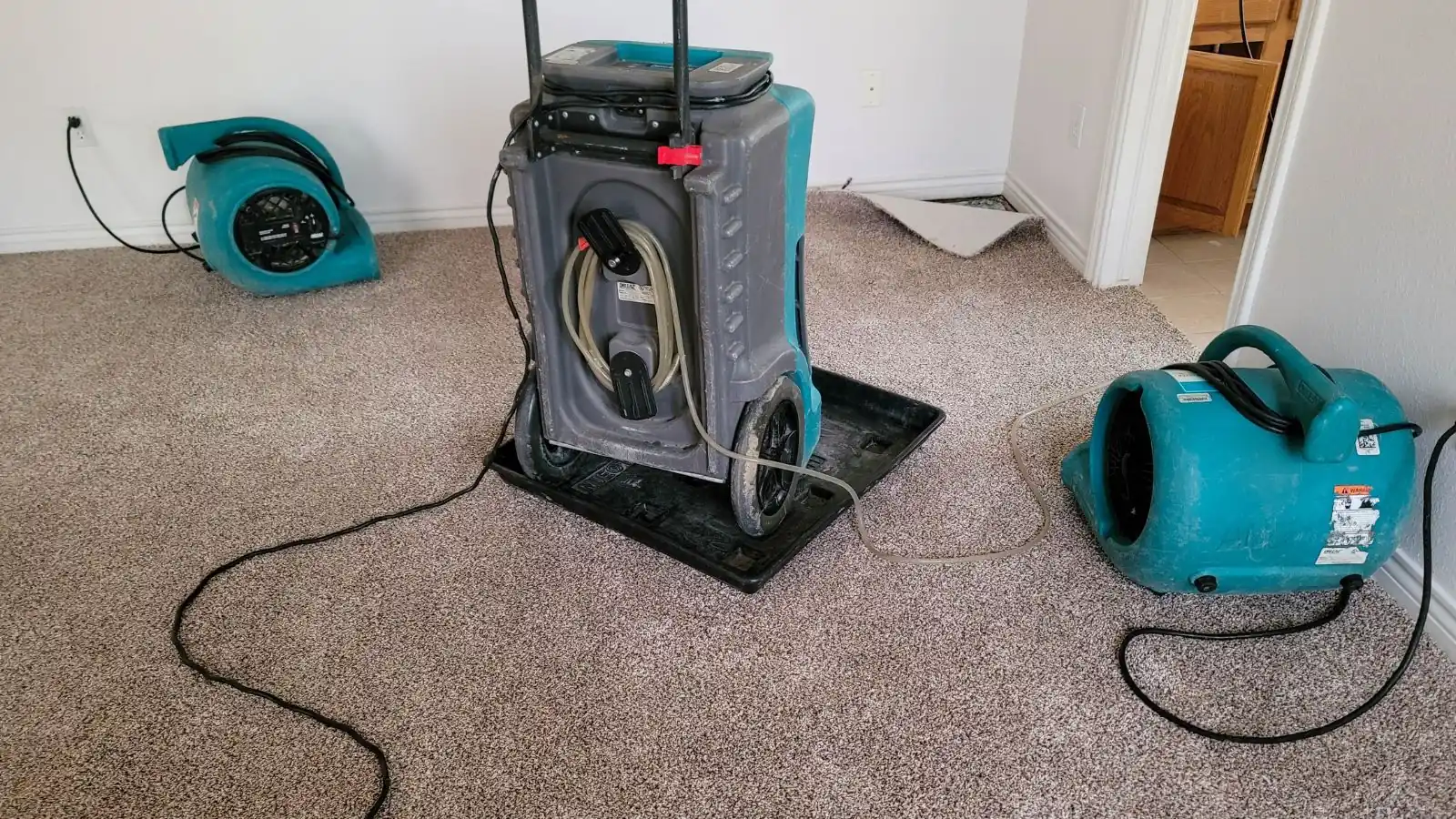
After water is removed, the structure is still wet. Wood, drywall, insulation and subfloor hold moisture, and the air in a wet house is humid. Structural drying uses air movers to push air across wet surfaces and dehumidifiers to pull moisture out of the air. It is the part of the job that determines whether mold has a chance, and it is what the term water mitigation describes in practice.
This page explains what the equipment does, how readings guide the work and how long drying usually takes. The EPA advises drying water-damaged materials in the first 24 to 48 hours to prevent mold growth, so the timeline is short.
Walls feel damp or the house smells musty after water?
People describe a wall that stays cool to the touch, baseboards that feel soft, carpet that never fully dries and a stale smell after a leak. Those are signs the structure is holding moisture. The trade name for fixing that is structural drying, also called water mitigation or dehumidification.
Opening a wall or lifting a floor is sometimes part of it, but only when readings show the material will not dry in place.
What the drying equipment does
Air movers
High-velocity fans move air across wet surfaces so water leaves the material and enters the air.
Dehumidifiers
LGR and desiccant units pull that moisture out of the air so it does not settle on cooler surfaces.
Moisture meters
Pin and pinless meters read how wet wood and drywall are, so drying is guided by numbers.
Thermal cameras
A camera shows temperature differences that point to wet areas behind surfaces.
Everything still feels damp?
Call to talk through readings and next steps.
How drying is measured
A drying job starts with readings and a record of them. Meters are used on a dry reference material to set a target, and wet areas are marked. Each day the readings are repeated, equipment is moved and adjusted, and the job ends when the wet materials reach the target. That daily record is also useful when you document the loss for your insurer.
The industry standard ANSI/IICRC S500 describes this process, and you can ask any company whether its crews work to it. Drying time depends on the material and the conditions. Thin drywall may dry in days, thick framing and concrete can take longer.
Drying by material
| Material | Typical approach | Watch for |
|---|---|---|
| Drywall | Air movers, flood cut if saturated | Wicking up the wall |
| Hardwood floors | Drying mats and dehumidification | Cupping and gaps. See what water does to hardwood |
| Carpet and pad | Extraction, lift and dry or discard | Contamination and mold. See carpet water damage restoration |
| Framing and subfloor | Dehumidification and heat | Readings that stay high |
| Concrete slab | Dehumidifiers over a longer time | Slow release of moisture |
Equipment is used on the job, not rented out
Callers sometimes ask whether they can rent air movers and dehumidifiers. The equipment is placed and monitored as part of the job, and this service does not rent it out. A drying plan depends on placement and daily readings, which is hard to replicate with rental units alone.
What to expect while the equipment runs
Plan on noise and warmth. Air movers are loud and dehumidifiers put out heat, so rooms feel warm and dry. Keep doors to dried-out rooms closed so the dehumidifiers work on the wet area. Do not unplug equipment to charge a phone, because a tripped job can add a day.
A technician returns each day to read the meters and move equipment. If a reading is not dropping, that is a sign the crew should check for a hidden source or open a wall. Ask to see the log.
Structural drying cost factors
Area and affected materials
More square footage and more wet material means more equipment.
Water category
Category 2 and 3 water add cleaning before drying.
Days of drying
Equipment is billed by the number of days it runs, which depends on readings.
Equipment count
Large or deep losses need more air movers and dehumidifiers.
Materials that dry slowly
Hardwood, plaster, concrete and insulation lengthen the timeline.
Insurers often ask for readings and equipment days, so request that log as the job runs and ask your adjuster what format they prefer. For a real figure on drying your structure, call (833) 521-1033.
Structural Drying Questions
How long does structural drying take?
It depends on the material and the starting moisture. Many drying jobs run several days, and thick or dense materials can take longer. Daily readings show when it is done.
Is the noise normal?
Yes. Air movers and dehumidifiers make noise, and they run around the clock during the job.
Can I run my own fans and dehumidifier instead?
Household fans help with minor dampness, but they do not guide drying with readings. For soaked materials, professional equipment and monitoring are the safer choice.
Will drying stop mold?
Drying quickly removes the moisture mold needs. It does not promise that mold will not develop, and anything already growing needs mold removal after water damage.