

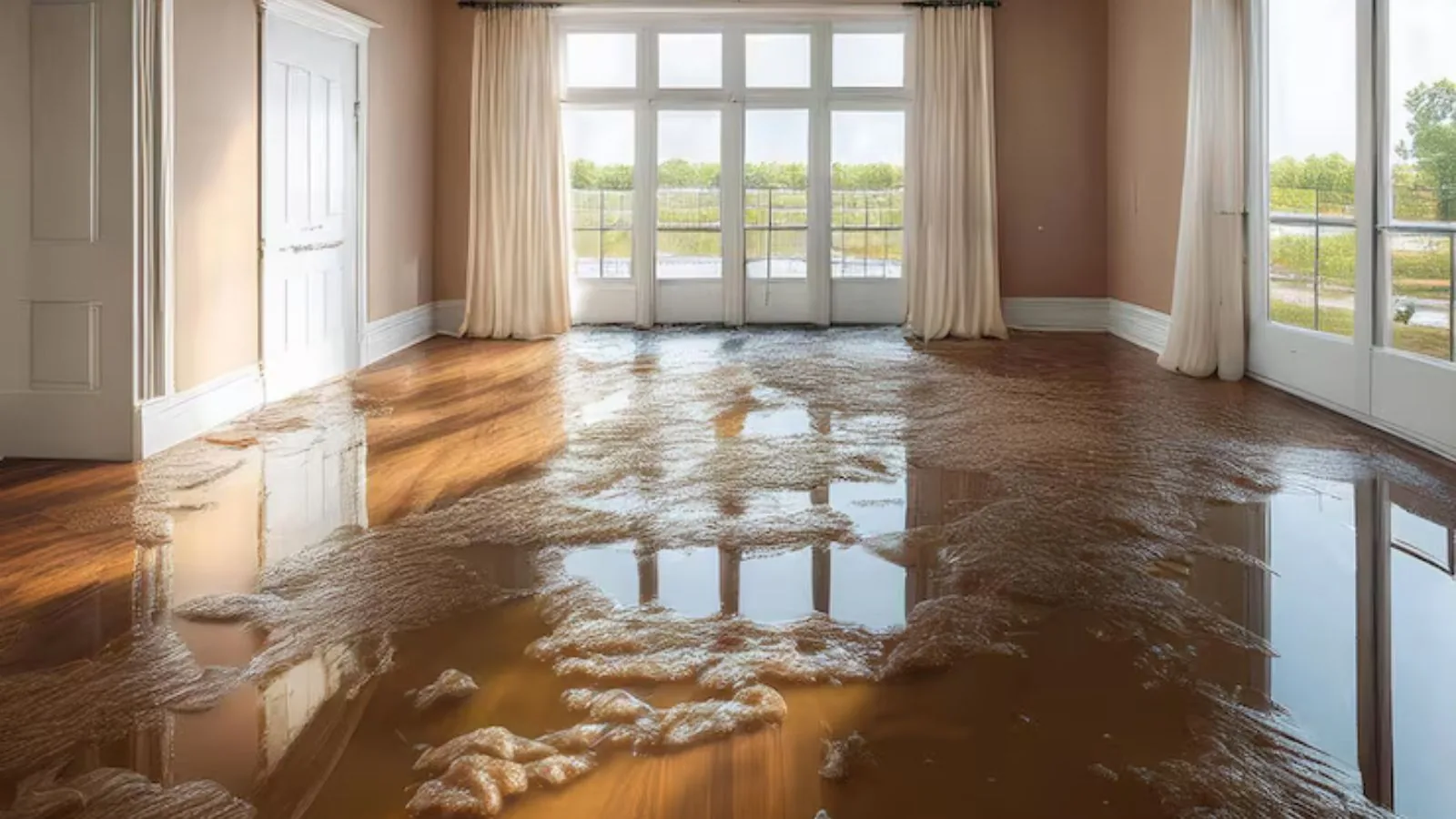
Flood damage means water that came from outside the plumbing system, such as heavy rain, overflowing streams and surface runoff. That water carries soil, bacteria and chemicals, so it is handled as contaminated and the cleanup is stricter than for a clean pipe leak. Mentor sits on the Lake Erie shore in Lake County, and the city has its own codified flood hazard regulations, so flooding here is a recognized local issue.
If water is in your home now, stay out of it and call the 24/7 line. If you are not sure whether water came from a pipe or from outside, say that on the call. The answer changes the safety steps and the materials that can be saved.
When floodwater is in the house
Floodwater is sorted by contamination. The industry standard ANSI/IICRC S500 describes three categories, and floodwater from the ground or a creek is normally treated as Category 2 or Category 3 depending on how contaminated it is. Porous materials that soaked in that water, including carpet, pad, insulation and mattresses, often cannot be saved.
Treat floodwater as contaminated
Keep children and pets out. Do not touch outlets or appliances that were in the water. Wear waterproof boots and gloves if you must enter. Do not run electronics or a furnace that sat in water until a qualified person has checked them.
What the Mentor record shows about flooding
Storms in Mentor are still measured against 2006, when the city timeline logged citywide flood damage and the National Weather Service recorded close to 10 inches in roughly 20 hours.
In 2013 the city asked residents to report flooding and sewer backup after a storm, and Lake County Emergency Management declared a local disaster area. Local news in 2011 reported flooding after about two inches of rain in five hours on frozen ground with melting snow.
The Marsh Creek watershed lies mostly inside Mentor and is heavily developed, according to a Lake County Soil and Water Conservation District report. Developed areas shed rain quickly, which is one reason runoff matters here. None of this predicts your address, so check the FEMA Flood Map Service Center for your own property.
Flood water in the house?
Stay out of it and call the 24/7 line.
How flood damage cleanup is done
Flood cleanup follows the contamination, not just the water level.
- Remove standing water with pumps and extraction units, wearing protective gear.
- Take out materials that cannot be cleaned. Lake County General Health District guidance after the 2013 storm said to discard wet carpeting, insulation, ceiling tiles, mattresses and upholstered furniture.
- Cut wallboard about a foot above the waterline when the wall was wet, as the same guidance describes, and let the area dry before rebuilding.
- Clean and sanitize hard surfaces and framing.
- Dry the structure with air movers and dehumidifiers, and recheck readings.
- Document everything with photos for your insurer.
Flood water versus other water losses
| Source | Usual category | Main concern |
|---|---|---|
| Rain or creek water entering the house | Category 2 or 3 | Contamination, porous materials discarded |
| Sewer drain backing up | Category 3 | Raw sewage. See sewage backup cleanup |
| Rain leaking in through the roof or walls | Category 1 or 2 at first | See storm water damage cleanup |
| Water seeping through a basement wall | Category 2 often | See basement water damage cleanup |
Flood cleanup cost factors and flood insurance
Contamination level
Category 3 water adds protective gear, disposal and sanitizing steps.
Depth and duration
Longer contact means more porous materials to remove.
Square footage and levels
More affected area means more equipment and more days of drying.
Contents and finishes
Carpet, pad, flooring and cabinets decide what is replaced and what is dried.
Rebuild scope
Replacing drywall, trim and flooring is separate from mitigation.
Flood damage is usually excluded from standard homeowners policies. The Ohio Department of Insurance notes that flood coverage is typically bought separately and that a 30-day waiting period usually applies, so ask your agent what applies to you. For an actual figure on cleanup and drying, call (833) 521-1033.
Flood Damage Cleanup Questions
Is anyone available during a storm after hours?
The line is open around the clock, and storms rarely arrive on office hours. Say where the water came from and whether the power is off.
Is floodwater always treated as contaminated?
Water that came from outside the plumbing system is normally treated as contaminated. The category depends on the source and how long it sat, and a professional assessment confirms it.
Can wet carpet from a flood be saved?
Usually not. Carpet and pad that soaked in floodwater are porous and typically discarded. Clean water leaks are different, and carpet can often be dried in place.
How do I find out if my home is in a flood zone?
Search your address on the FEMA Flood Map Service Center, and ask the City of Mentor Engineering and Building Department about local flood hazard rules.