

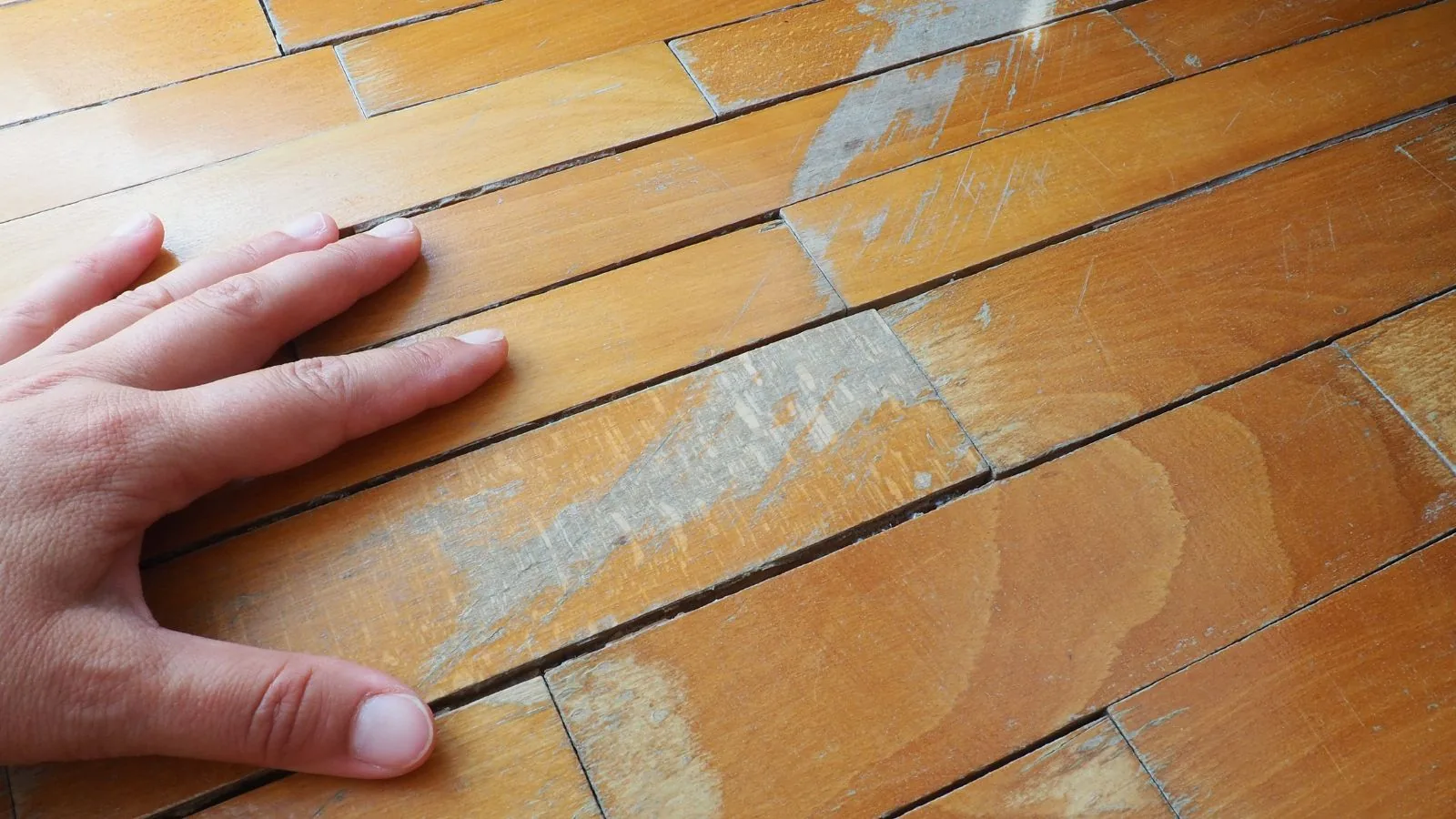
Hardwood is a natural material that swells when it takes up water. A small amount of moisture makes boards cup, with the edges higher than the center. More moisture can make them buckle, which lifts boards off the subfloor. After the floor dries, boards often shrink and leave gaps. How a floor responds depends on how fast it is dried.
This page covers the floor itself. For the source of the water, see burst pipe water damage, leaks from washers and dishwashers or kitchen water damage restoration.
What water does to a wood floor
Cupping
The board edges rise because the underside took on more moisture than the top. It often flattens after drying.
Crowning
The center rises, often after a cupped floor was sanded before it was dry.
Buckling
Boards lift off the subfloor, which is a more serious sign.
Gaps and staining
Boards shrink as they dry, and dark stains may show where water sat.
Can the floor be dried in place?
In many cases yes, if the water was clean and the response was quick. Drying mats or panels pull moisture from the boards, and dehumidifiers bring the room down to a target. Moisture meters track the boards and the subfloor, and the floor is left alone until readings are normal. Sanding and refinishing before the wood is dry can lock in problems, so repairs come after readings are normal.
If boards have buckled badly, if water was contaminated or if mold is present, removal of the affected area may be the better choice. Engineered flooring and floating floors behave differently from solid boards, and some cannot be saved once the layers separate.
Wood floor wet?
Call and tell us the floor type and how long it was wet.
Hardwood drying steps
- Stop the leak and extract any standing water.
- Remove rugs, furniture and anything that holds water against the floor.
- Set drying mats or panels and dehumidifiers.
- Read board and subfloor moisture each day.
- Wait for readings to reach normal before sanding or refinishing.
- Replace boards that stay cupped or buckled, and refinish for a match.
Solid, engineered and laminate floors
| Floor type | Reaction to water | Usual path |
|---|---|---|
| Solid hardwood | Cups or buckles, may flatten after drying | Dry in place, then sand if needed |
| Engineered hardwood | Layers can separate | Dry quickly or replace |
| Laminate | Core swells at seams | Often replaced |
| Luxury vinyl plank | Water sits under the planks | Lift and dry the subfloor |
Sanding, refinishing and replacing boards
Once the floor is dry, a flat floor with light staining can often be sanded and refinished. Deep dark stains from long contact with water usually mean the wood is damaged, and the stained boards are replaced instead. New boards are woven into the old pattern and the whole floor is refinished so the color matches.
Gaps that open as boards shrink may close again over a season as humidity changes, and wood filler is used only for gaps that stay. Pre-finished floors and site-finished floors differ here. Pre-finished boards have beveled edges that show gaps more, so the repair choices vary by floor.
Ask for the readings before anyone sands. A floor that feels dry on top can still hold moisture below, and refinishing it too early traps that moisture.
Questions to ask before a wood floor is torn out
Removal is permanent, so ask a few things first. What do the moisture readings say, and how do they compare with a dry piece of the same floor? Has the floor been given time to dry with mats or panels? If boards are cupped but not buckled, a short wait often beats a rushed replacement.
Also ask who will match the stain and finish, and whether the repair covers one room or runs across a doorway into the next. A clean break at a threshold is easier to hide than a patch in the middle of an open floor.
Hardwood water damage cost factors
Floor type
Solid wood is more often saved than laminate.
Time wet
Quick drying lowers the chance of permanent damage.
Square footage
A larger floor needs more mats and equipment.
Refinishing
Sanding and refinishing are repair costs after drying.
Subfloor condition
A wet subfloor can add drying days and repairs.
A floor ruined by a sudden leak may be covered, while slow moisture damage often is treated differently. Photograph the boards before any are lifted, and ask your agent how refinishing is handled. Call (833) 521-1033 for a price you can count on.
Drying wood floors is covered by the ANSI/IICRC S500 standard, which calls for monitoring moisture rather than guessing by feel.
Hardwood Floor Water Damage Questions
Will my cupped floor go flat again?
Often it flattens as it dries, but not always. Wait until readings are normal, because sanding too early can lock in the distortion.
Should I pull up the boards myself?
It is better to ask first. Removing boards can help drying in some cases and can harm it in others.
How long before I can refinish?
Only after moisture readings show the boards and subfloor have reached normal. That can take days or longer depending on the floor.
Can engineered flooring be saved?
Sometimes, if it is dried fast. If the layers have separated, replacement is usual.