

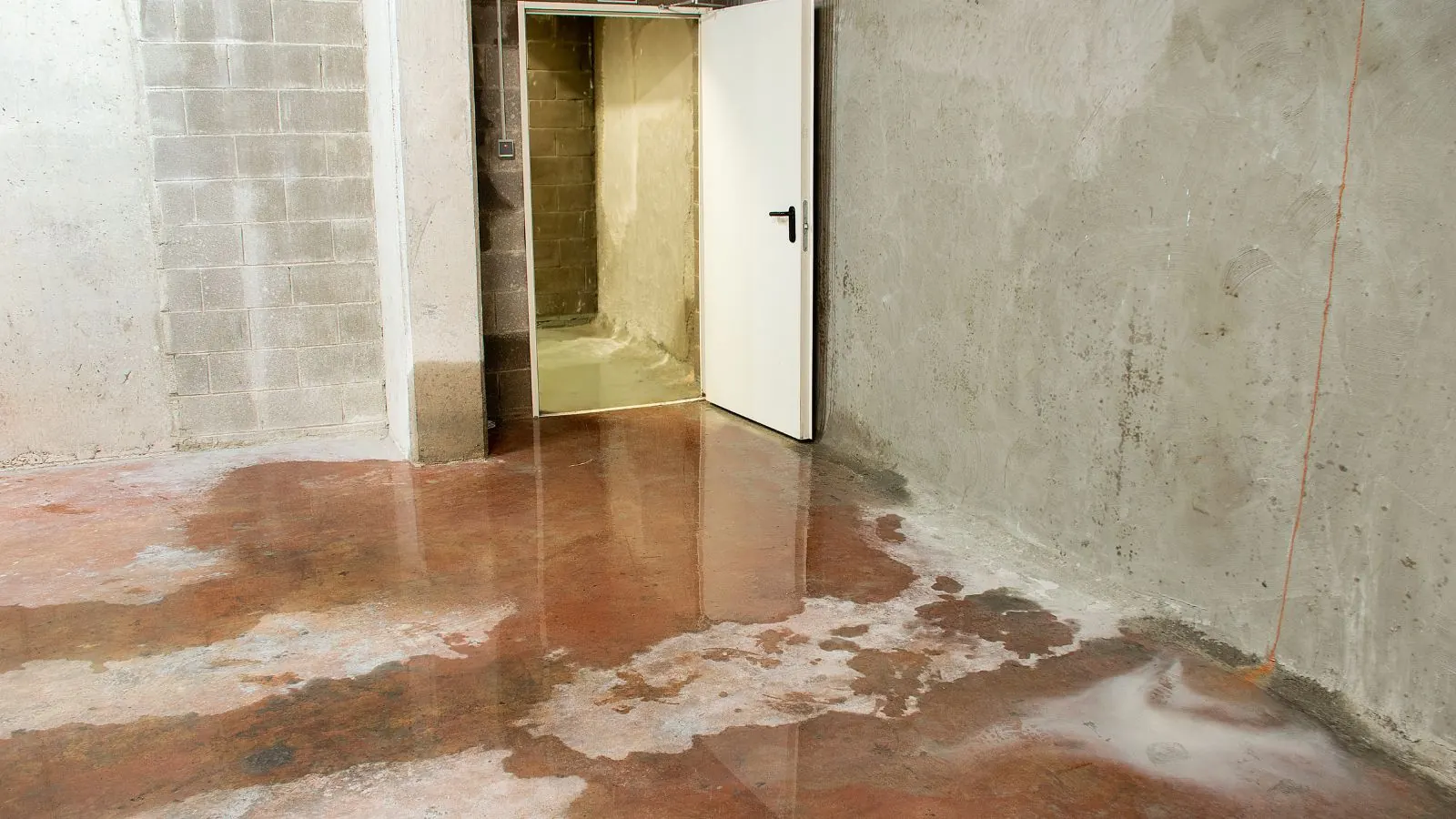
Basements sit below the ground and catch water from several directions. Heavy rain raises groundwater, floor drains can back up, a sump pump can fail, and a supply line can burst. The cause matters because it determines the water category and what happens after cleanup.
Basement water also threatens things people store there, such as boxes, furniture and appliances. This page covers extraction, drying and the decisions about walls and floors. It does not cover waterproofing. Restoration cleans and dries what the water reached, and a waterproofing contractor addresses how water gets in.
Water in the basement right now
- Do not enter if water is near the panel, outlets or appliances.
- If the water is rising from a drain, stop using sinks, toilets and the washer.
- Shut off the main water valve if a pipe has burst.
- Move items off the floor only if you can do so safely from dry ground.
- Do not use a household vacuum on standing water.
- Photograph the water line and call the 24/7 line.
Basement water and electricity
A basement can hold the panel, the furnace and the water heater. If water is touching any of them, do not wade in, and leave the power question to an electrician.
Where basement water comes from
Groundwater and wall seepage
Heavy rain and a high water table push water through floor cracks and wall joints.
Floor drain and sewer backup
Water that rises from a drain is contaminated. See sewage backup cleanup.
Sump pump failure
A pump that stops during a storm lets the pit overflow into the room.
Plumbing leak
A burst supply line or water heater failure puts clean water in the room. See water heater leak cleanup.
Standing water downstairs?
Do not wade in near wiring. Call the 24/7 line.
Cleanup, drying and what stays
Standing water is pumped out, and the pace matters, since removing too much too fast from a flooded basement can stress walls. Wet drywall, insulation and carpet are checked, and what cannot be dried is removed. Concrete walls and floors are dried with dehumidifiers over days.
Stored items are sorted. Cardboard boxes and porous contents usually go, while hard goods can be cleaned. If the water came from a sewer or from flood water, health authorities advise discarding food, mattresses and upholstered furniture that touched it.
Restoration is not waterproofing
Drying a basement does not stop the next storm from wetting it again. If water entered through a crack, a window well or an overwhelmed drain, a separate repair is needed. Waterproofing, grading, gutters, downspouts and sump systems are done by other trades, and a restoration crew will tell you what it saw so you can decide.
Ask your building department about local rules before major drainage work. For storm events, see the storm water page. For drying methods, see structural drying.
Sorting what was stored in the basement
Basements collect the things a household does not use every day, such as holiday boxes, tools, old furniture and photo albums. After water comes in, those items are sorted into three piles. Hard goods like tools, plastic bins and metal shelving can usually be cleaned and dried. Paper, cardboard and fabric that sat in water are often lost, though photos and documents can sometimes be dried flat if they are handled quickly.
If the water was clean, such as a supply line failure, more of it can be saved. If the water came from a drain or from outside, discarding porous items is the safer call. Ask the crew to list what was removed, since your insurer may want that list along with your photos.
Basement water damage cost factors
Water depth and volume
More water means more pumping and more wet materials.
Water category
Clean, gray and contaminated water need different handling.
Finished or unfinished
A finished basement has drywall, carpet and trim to deal with.
Contents
Sorting and disposal add time.
Cause
Waterproofing and drain repair are separate from cleanup.
Seepage, sump failure and sewer backup are treated differently by most policies, and some need endorsements before they pay. Pull out your declarations page and find those lines first. Call (833) 521-1033 and ask what pump-out and drying would cost.
Sorting basement water by contamination category comes from ANSI/IICRC S500, and a crew should be able to say which category yours is.
Basement Water Damage Questions
Can I call at night when the basement floods?
Yes, the line is staffed overnight, and heavy rain often fills basements after dark. Call once it is safe to do so.
Will cleanup stop my basement from flooding again?
No. Restoration cleans and dries what the water reached. If water keeps coming in, a waterproofing or drainage contractor needs to fix how it enters.
Is it safe to walk in a wet basement?
Only if you are sure the water is not touching wiring, outlets or appliances. If you are not sure, stay out and call.
Can a finished basement be dried without tearing it apart?
Sometimes. Readings decide, and only wet drywall and insulation that will not dry are removed.