

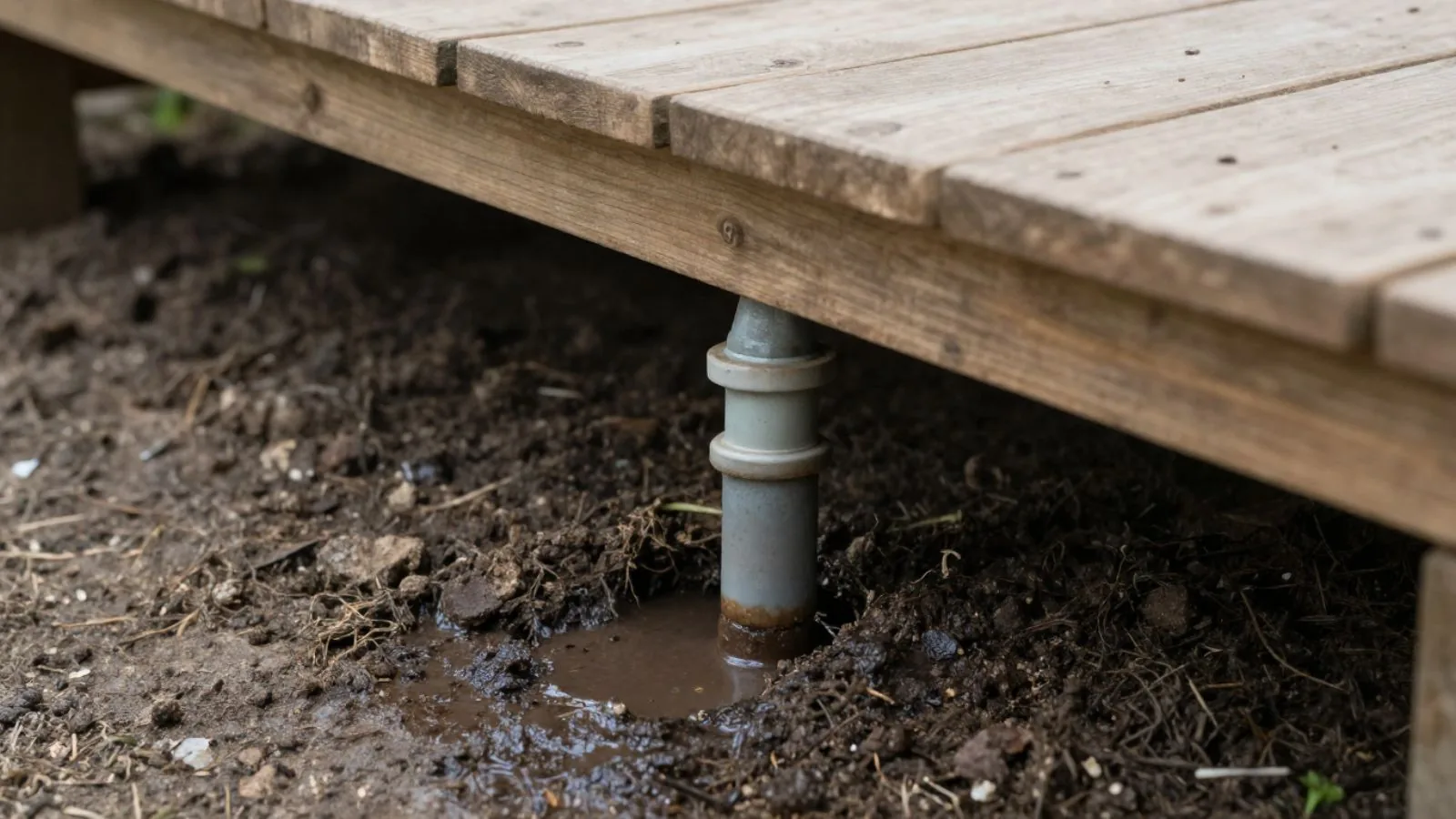
A frozen pipe often does not leak while it is frozen. The ice blocks the line and can split the pipe wall, and the water only escapes once the ice melts and pressure returns. That is why the damage frequently appears hours after the coldest part of the night, when a house warms up or the sun hits an exterior wall.
This page covers the thaw and the cleanup after the pipe has split. It is separate from burst pipe water damage, which covers pressurized lines that fail for other reasons. If a pipe is frozen but not yet leaking, keep the area warm, leave the faucet open a little, and call a plumber before using any heat source near it.
Frozen pipe emergency: stop the water at the source
Once a pipe has split, the water keeps coming until the supply is closed.
- Shut off the main water valve and open the faucet on the bottom level to drain the lines.
- Do not use an open flame or a propane torch on any pipe. Slow warmth from a hair dryer or a space heater placed safely away from water is the usual choice, and only when no water is escaping.
- Check the rooms below and beside the pipe, including finished ceilings and cabinets.
- Photograph the split pipe and the wet area first, before you move things.
- Call the 24/7 line once the water is shut off, and say which room the pipe is in.
Thawed ice and electrical cords
Do not run extension cords through wet areas or use electric heaters in standing water. If water reached an outlet or panel, call the electric utility or 911 for any sparking or burning smell.
Where frozen pipes usually fail in a house
Exterior wall cavities
Lines on the cold side of insulation are the most exposed, and the wall is the first thing to get wet.
Garages and unheated rooms
Supply lines that run through unheated space can split near the cold wall or an uninsulated corner.
Crawl spaces and basement ceilings
Pipes in the floor joists can freeze where cold air reaches them, and water drips into finished space below.
Outdoor hose bibs and their lines
A split behind the faucet can leak inside the wall even when the outside spigot looks dry.
Thaw leak spreading?
Close the main valve, then call the 24/7 line.
How common are frozen pipes in Mentor?
This page does not quote a local freeze statistic, because a number needs a source. NOAA and the National Weather Service Cleveland office publish climate normals for northeast Ohio, including days below freezing, so check those if you want a figure for your area. What can be said without a number is the mechanism. A pipe is at risk when it sits in a cold space and the temperature stays below freezing long enough for ice to form.
If your home has a room that gets colder than the rest, such as an enclosed porch, a garage wall or a crawl space, that is where a freeze break is most plausible. Note which room it was when you call, because the drying plan follows the water, not the pipe.
Cleanup after a thaw leak
The work is the same sequence as other supply line breaks. Extraction removes standing water, moisture mapping finds where it went, and drywall or insulation that cannot dry in place is removed. Air movers and dehumidifiers then run until wood and drywall reach normal readings.
Frozen pipe water often runs for a long time before anyone notices, especially in a closed space. If the break was in an unused room or a closed wall, ask for moisture readings in the rooms around it. You can read more about the drying stage under how structural drying works.
What drives frozen pipe cleanup cost
How long the thaw ran
A leak caught at once affects less than one that ran while the house was empty.
Rooms and levels affected
Water that dripped into a finished room below adds ceilings and floors to the scope.
Insulation and drywall in the wall
Wet insulation is usually removed, and drywall depends on how long it stayed wet.
Drying days and equipment
Equipment count and run time depend on how much structure got wet.
Repair after drying
Drywall, paint and trim replacement is a separate scope.
Freeze splits are often treated as sudden damage, though policies differ on vacant homes and upkeep, so read those clauses before you assume anything. A call to (833) 521-1033 gets you a real figure for the drying side of the job.
A crew following the ANSI/IICRC S500 standard will measure the wet area, set drying goals and record readings until those goals are met.
Frozen Pipe Water Damage Questions
Do you take calls when a pipe thaws and splits overnight?
Calls are answered 24/7, and a pipe that splits after a freeze is a normal reason for a late one. Tell the dispatcher which room is wet.
Is it safe to thaw a frozen pipe myself?
If the pipe has not split, gentle warmth from a hair dryer can work. Never use a flame or a torch. If water is leaking, close the main valve first and call a plumber to repair the pipe.
Why did the pipe leak only after it warmed up?
Ice blocks the pipe and can split the wall. When the ice melts, the opening is exposed and water flows out under normal pressure.
Can wet insulation stay in the wall?
Usually not. Wet insulation holds moisture against framing and drywall, so it is typically removed and replaced after the wall dries.