

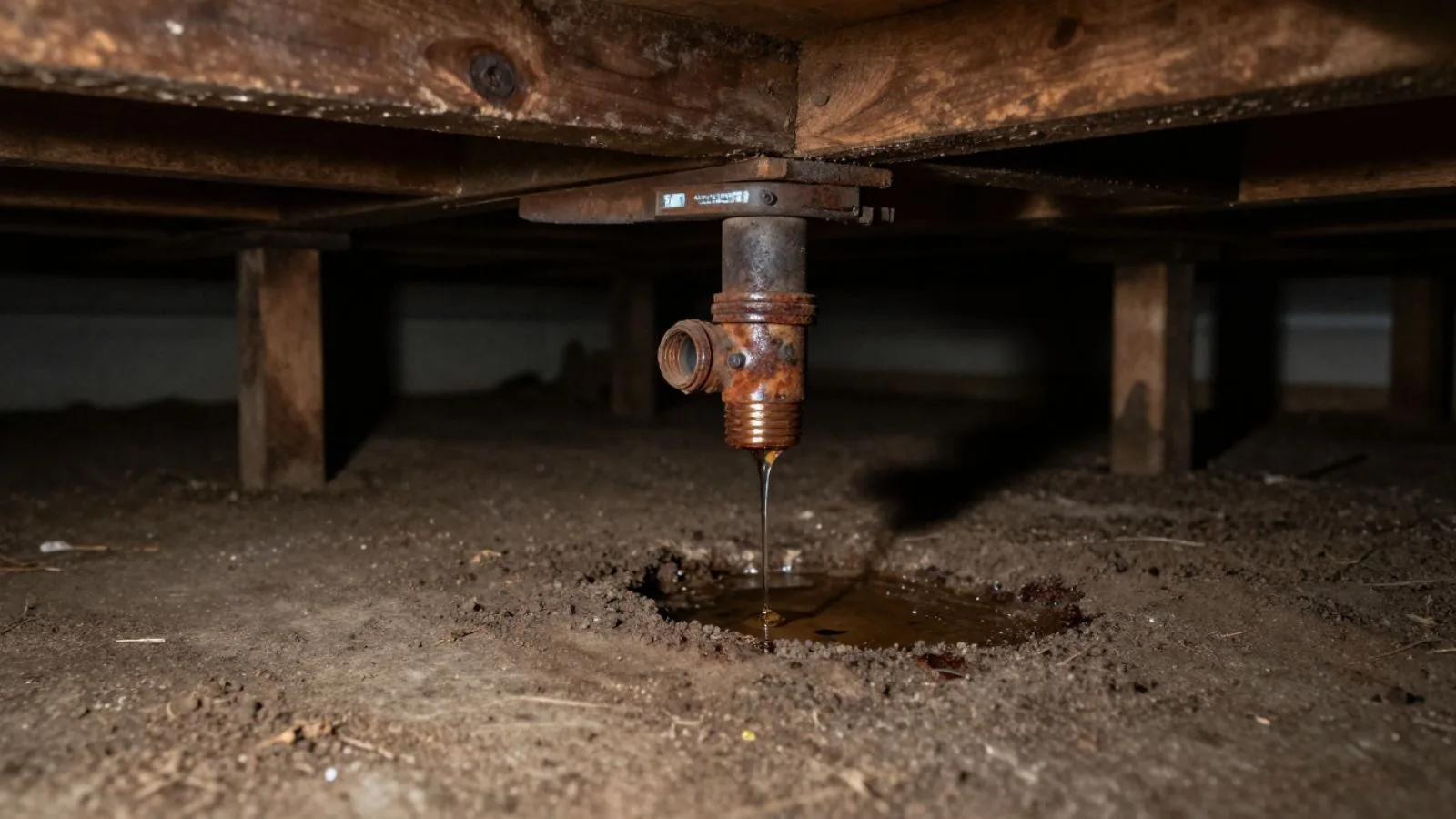
A crawl space is the low void between the ground and the first floor, and it is where water goes unnoticed. A pipe can drip for months, groundwater can seep in after heavy rain, and an irrigation or downspout problem can send water toward the foundation. The first sign upstairs may be cold floors, a musty smell or cupping boards.
This page covers the water damage in the void and what it means for the floor above. If your home does not have a crawl space, you may want cleanup after basement water instead. Call before you crawl in, since wet insulation, mud and tight space make it unsafe to do alone.
Signs of water in a crawl space
Musty smell in the rooms above
Moisture under the house moves up through gaps in the floor.
Cupping or soft floors
Wood floors take up humidity from below and cup or warp.
Sagging or wet insulation
Insulation between joists soaks up water and loses its shape.
Standing water or damp soil
Visible water after rain, or soil that stays dark and wet, points to an active source.
Where crawl space water comes from
There are three common sources. Plumbing leaks drip from supply or drain lines in the void. Groundwater and rain move through the soil and the foundation wall. Surface water from gutters, downspouts or grading finds its way along the wall to the void.
Marsh Creek runs mostly through Mentor, and a county conservation district report calls the surrounding area heavily developed, with hard surfaces that send rain off quickly. Faster runoff can mean more water against foundations. That report is about a stream, not about your crawl space, so check drainage around your own house.
Water or damp insulation under the floor?
Call and describe what you see before you go in.
Crawl space cleanup steps
The order matters in a tight space.
- Find and stop the water source, whether a pipe or runoff.
- Extract standing water with a pump designed for low spaces.
- Remove wet insulation and any debris that holds moisture.
- Dry joists and subfloor with air movers and a dehumidifier, using readings to confirm progress.
- Check the floor above for cupping or damage.
- Recommend source repairs, such as drainage or plumbing, to a qualified trade.
Crawl space water versus basement water
| Feature | Crawl space | Basement |
|---|---|---|
| Access | Low, tight | Full height |
| Main moisture concern | Humidity moving up into floors | Standing water and wall seepage |
| Drying approach | Pumps, dehumidifiers and insulation removal | Extraction, drying and contents handling |
| Related page | This page | Basement water damage cleanup |
Vapor barriers, insulation and what comes next
Many crawl spaces have a plastic sheet over the soil, called a vapor barrier. If water got under the sheet, it may need to be lifted so the soil can dry, then laid back. Fiberglass batts that fell or soaked are replaced, since wet batts press against the subfloor and keep it damp.
After drying, ask whether the source is fixed. A pipe leak is repaired by a plumber, and a groundwater problem may need drainage work from a different trade. If the space stays damp, a crew can only dry it again, so the long-term fix matters. Your building department can tell you what permits apply to drainage or foundation work.
Crawl space water damage cost factors
Water source
A plumbing leak ends once the pipe is fixed, while groundwater needs a longer drainage fix.
Size and access
Small hatches and low clearance add labor.
Insulation condition
Wet insulation is removed and replaced.
Wood moisture
Joists and subfloor that stay wet extend the drying days.
Mold present
If growth is found, see mold remediation.
The cause drives coverage. A sudden pipe break is often covered, while ongoing seepage from the ground often is not. Your insurer can confirm which one you have, and (833) 521-1033 will quote the drying work.
Crawl Space Water Damage Questions
Should I go into a wet crawl space myself?
It is better not to. The space is tight, wet and may hold damp insulation or contamination, and live wiring may be present. Ask for help before entering.
Can a crawl space leak cause a musty smell inside?
Yes. Moisture under the floor can move up through gaps, and the smell is a common first sign.
Is crawl space water the same as basement water?
The sources can be the same, but access, drying and floor effects differ. A crawl space dries through pumps and dehumidifiers, while a basement often involves bigger volumes and contents.
Do you fix the drainage problem outside?
No. Grading and gutters belong to other trades. This service covers cleanup and drying.