

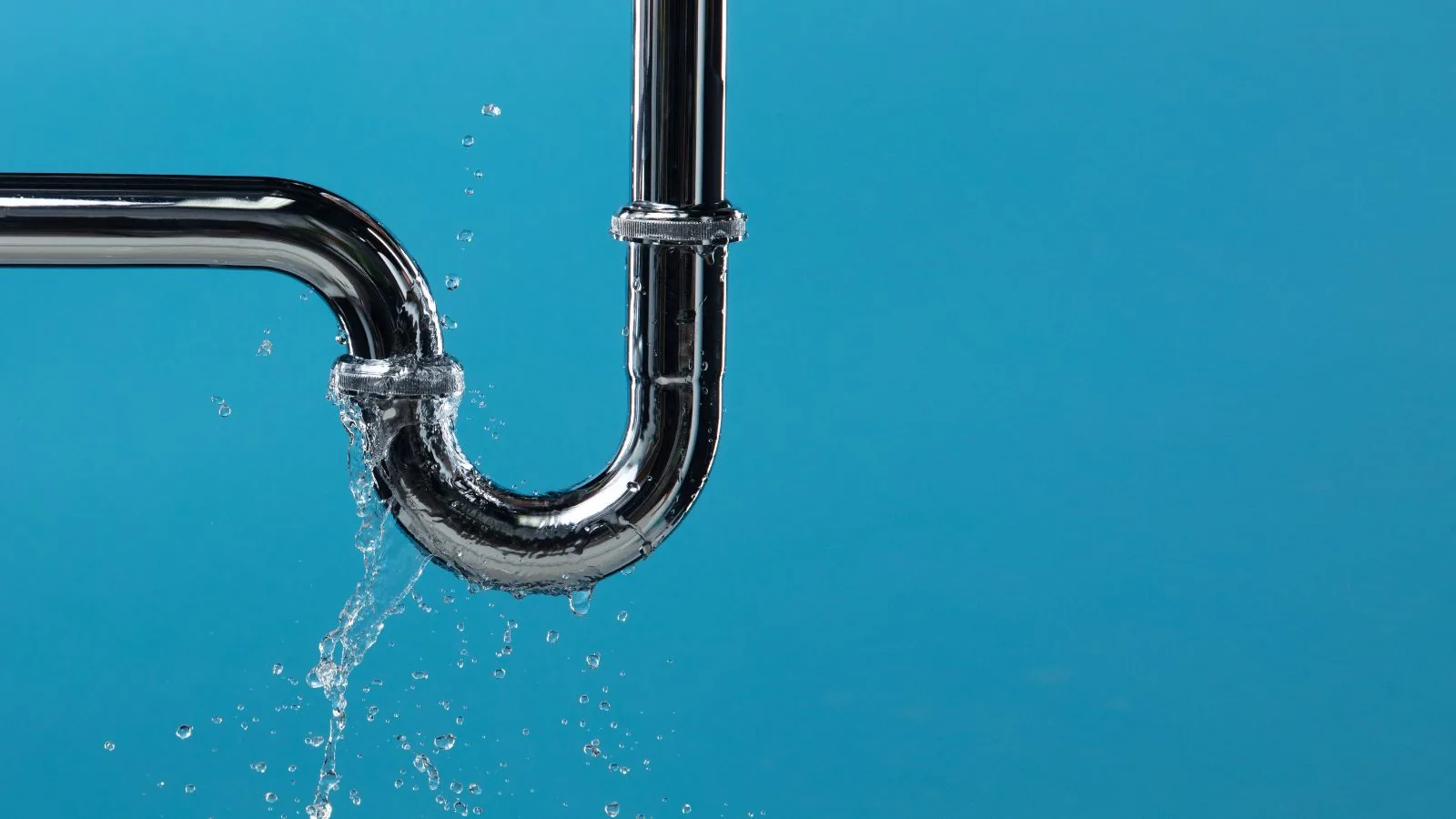
A kitchen has a sink, a dishwasher, often a refrigerator line and sometimes a garbage disposal, all in a small space. A leak under the sink can drip for weeks, and the damage shows up as a swollen cabinet base, a soft floor or a musty smell. Because cabinets sit on top of the floor and against the wall, water gets into places that are hard to see.
This page is about the water damage after a kitchen leak. If a washing machine or dishwasher is the source, see appliance leak water damage. If a pipe has burst, see burst pipe water damage.
Where kitchen leaks hide
Under the sink
Drain traps, supply lines and shut-off valves leak slowly and soak the cabinet floor.
Behind the dishwasher
Hoses and clamps drip during cycles, and the toe kick area stays wet.
Under the refrigerator
Ice maker lines can leak behind the unit and wet the subfloor.
Inside the walls
Supply lines to the sink run in the wall and can wet drywall and insulation.
Cabinets, countertops and flooring
Cabinet materials respond differently. Solid wood can often be dried, while particleboard swells and rarely returns to shape. Countertops usually survive, but the cabinets under them may need to be removed to dry the wall and floor. Floors vary. Tile is resilient but the subfloor below can stay wet, while hardwood and laminate may cup or lift.
The crew removes the toe kick and checks behind it. Moisture readings in the cabinet base, the wall and the floor decide what is removed. See the hardwood floor page for the flooring side.
Cabinet or floor wet in the kitchen?
Shut off the supply and call to describe it.
Kitchen cleanup steps
- Stop the leak and shut off the supply valve.
- Empty the cabinet under the leak and remove standing water.
- Remove the toe kick and any wet baseboard to expose the wall base.
- Dry the cabinet base, subfloor and wall with air movers and a dehumidifier.
- Check readings daily until materials reach the target.
- Replace or repair cabinets, flooring and drywall as needed.
Salvage or replace
| Material | Often salvageable? | Notes |
|---|---|---|
| Solid wood cabinets | Often | If dried before warping |
| Particleboard or MDF cabinets | Rarely | Swells and loses strength |
| Granite or stone countertops | Usually | Check the cabinet base beneath |
| Tile floors | Usually | Subfloor may stay wet |
| Laminate and vinyl planks | Case by case | Seams trap water |
Appliances, countertops and what to move first
In a kitchen, the heavy items are the problem. A refrigerator and a range sit on the floor that got wet, and moving them without damaging the flooring takes planning. The crew pulls them forward or out to reach the wall and floor behind them, and sets them back after drying.
Countertops stay in place in most cases. If cabinets must come out, the countertop is detached and supported, and a stone top is handled with care because it is heavy and can crack. Keep valuables and food off wet surfaces, and throw out food that touched contaminated water.
Insurance adjusters often want the cabinet and flooring details in writing. Ask for photos of the toe kick and the cabinet base before they are covered back up.
Questions to ask about a kitchen repair
Ask which cabinets come out and why, and whether the readings support removal. Ask how the countertop is protected during the work and who reinstalls the sink and appliances. A plumber must reconnect supply lines and drains, so the schedule has to include one.
Ask for the order of work as well. Drying comes first, then demolition of what cannot be saved, then rebuilding. A kitchen put back together before the wall cavity is dry is a kitchen that may smell musty by spring.
Kitchen water damage cost factors
Leak source and duration
A burst line is quick and large, while a drip is slow and hidden.
Cabinet material
Particleboard is replaced more often than solid wood.
Floor type
Tile, hardwood and laminate each dry differently.
Wall wicking
Water that climbed the wall adds drywall and insulation.
Rebuild
Cabinets, counters and flooring are repair costs separate from mitigation.
A sudden failure under the sink is often handled differently from a slow drip, so tell your insurer which one you had and when you first saw it. Call (833) 521-1033 for a figure on the kitchen drying and repair.
ANSI/IICRC S500 is the usual reference for deciding which kitchen materials are dried in place and which are removed.
Kitchen Water Damage Questions
Can cabinets be saved after a leak?
Solid wood sometimes can, and particleboard rarely can. Moisture readings and a look at the base show which it is.
Why is there a musty smell under my sink?
A slow leak can wet the cabinet base and the wall behind it. Dry the area and fix the leak, and see the mold remediation page if you see growth.
Do I need to remove the countertop?
Usually not. The cabinet base and wall are accessed from the front and the toe kick, and the countertop only comes off when a repair requires it.
Do you fix the plumbing too?
No. A plumber repairs the pipe or fixture. Restoration dries and repairs what the water reached.