

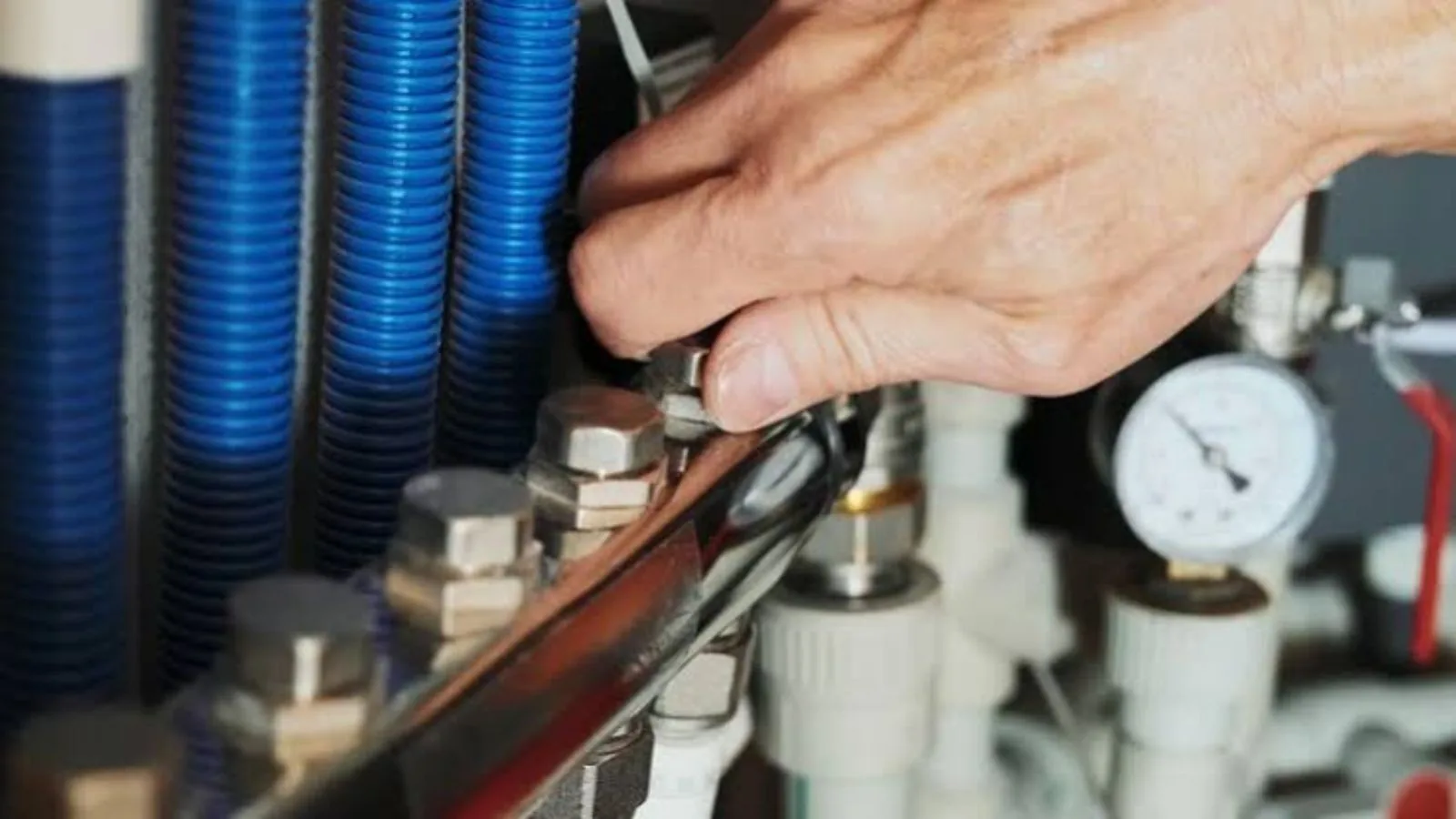
A water heater failure usually shows up as a puddle around the base, a rusty seep from the tank seam or a fitting that has started to drip. A full tank failure is bigger, because the tank holds a large volume that can spread across a basement or utility room in minutes. This page covers the water damage side. Repairing or replacing the heater is a plumber's job.
If the heater is leaking now, close the cold water inlet valve on the pipe at the top of the unit and turn off its power. For a gas unit, turn the gas control to off. If the water is touching anything electrical, stay out of the room and call 911 or the electric utility.
Water heater emergency: steps in the right order
Shutting off the supply first stops more water from entering the tank.
- Close the cold water inlet valve above the heater.
- Turn the power off at the breaker if you can reach it without stepping in water. For gas, set the control to off.
- Open a nearby hot tap to let pressure out, and use a hose on the tank drain only if the heater is cool and you know where it drains.
- Move boxes, stored items and electronics out of the water.
- Photograph the heater, the label and the wet area for your records.
- Call the 24/7 line and say where the heater is and which rooms are wet.
Hot water and electrical hazards
A tank that just failed can still hold very hot water. Keep clear of the base of the tank and do not touch wet wiring. Call 911 for any gas smell and leave the house.
Where the water goes
Water heaters sit in basements, garages, closets and utility rooms. Water from a leak runs across the floor to the low point, soaks the bottom of walls and baseboards and seeps under flooring. A heater in a finished space such as a laundry closet pushes water into carpet, cabinets and drywall quickly.
In a basement, the first concern is whether the floor drain handles the volume. In an upstairs closet, the concern is the ceiling below. Mention where the heater sits when you call, because it tells the crew where to look for hidden water.
Heater leaking now?
Shut off the cold inlet valve, then call the 24/7 line.
Cleanup after a water heater leak
Water from a heater tank is clean supply water at first, so it is often Category 1. Cleanup begins with extraction of standing water, followed by moisture readings in the walls, flooring and anything stored on the floor. Carpet is lifted or dried in place depending on how long it was wet.
Drywall behind the heater often wicks water upward, and a quick check with a moisture meter shows how far. When the damage reaches the lower wall, the repair follows the same steps as repairing water-damaged walls. If the heater leak ran for a long time, see the notes on the drying and dehumidification page.
When a leak is only a seep versus a failed tank
| What you see | Likely meaning | Next step |
|---|---|---|
| Drip at a pipe fitting | A connection or valve leak | Close the inlet valve. A plumber repairs the fitting |
| Water from the relief valve pipe | Pressure or temperature relief at work | A plumber checks the cause before the heater is used again |
| Rusty water at the tank seam | The tank is failing | Shut off the supply. The tank is replaced, and wet areas are dried |
| Large amount of water across the floor | Tank failure | Shut off supply and power, then call for extraction and drying |
Water heater leak cleanup cost factors
Volume and duration
A slow seep soaks less material than a full tank release.
Location of the heater
A basement, a closet and a garage each call for different extraction and drying.
Flooring and stored items
Carpet, laminate, boxes and cabinets decide what is dried and what is discarded.
Wall height of the wetting
Water that wicked up a wall means a larger drywall section to dry or cut.
Heater replacement
The new heater is a plumbing cost and is separate from water damage work.
A tank that fails suddenly is often treated differently from a slow leak nobody noticed, so write down how old the heater is when you document the loss. Replacement permit rules vary, so check with the engineering and building office at City Hall. To put a number on the water damage itself, call (833) 521-1033.
Per ANSI/IICRC S500, a clean water heater leak is handled differently from water that has sat for days, so timing matters.
Water Heater Leak Cleanup Questions
My water heater failed overnight. Can I call now?
Yes, the line stays open all night. Shut off the water and the power to the heater if you can reach them safely, then call and say how much water there is.
Do you replace the water heater?
No. This service covers extraction and drying after the leak. A plumber replaces or repairs the heater.
Is water from a tank leak clean?
Water from a heater tank starts as clean supply water. It can pick up contamination if it sits long enough or mixes with dirt and stored items, so reporting how long it ran helps.
Can I run the heater again after drying?
Only after a plumber has checked and repaired it. A heater that failed once may have a corroded tank, and restoration does not clear it for use.