

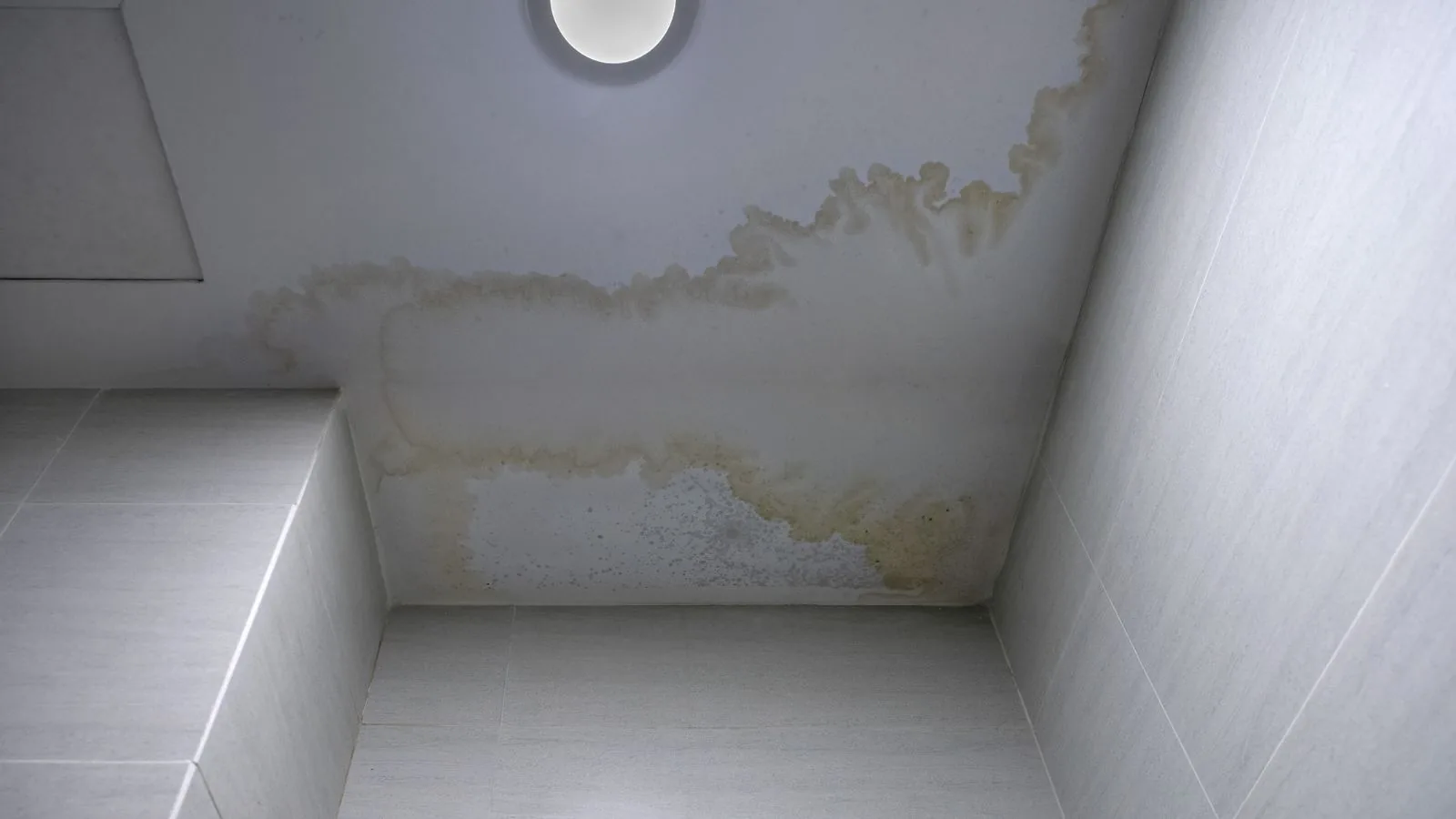
A wet ceiling is a problem with two parts. The visible stain or sag is the symptom, and the real issue is the water sitting in the joist space above it, whether it came from the roof, an upstairs bathroom, a supply line or an air conditioner. This page covers the ceiling and what is above it, and it also covers roof leaks, because a leaking roof is only a ceiling problem when water gets through.
If water is dripping now, put a bucket under it and move furniture out of the way. If the ceiling is bulging or sagging, keep people out of that room. Trapped water makes drywall heavy, and a ceiling can fall without much warning.
Sagging or dripping ceiling: what to do now
Move furniture and electronics from under the area, catch drips with a bucket or a plastic sheet, and take photos of the stain and any active drip. If the leak seems to come from a bathroom above, stop using that bathroom until the source is found.
Do not poke a sagging ceiling while standing under it
Water pooled in a bulge can release all at once. A professional relieves it from a safe angle with a small opening and a bucket. If the ceiling is near a light fixture or a ceiling fan, leave the power off and keep the area clear.
Where ceiling water comes from
Roof leaks
Water gets through shingles, flashing or a vent boot, runs along the decking and drops through insulation to the ceiling below.
Upstairs plumbing
A leaking toilet seal, tub drain or supply line can drip through the floor above into a ceiling that looks clean until it is soaked.
HVAC in the attic
A clogged condensate line or a leaking air handler pan can wet a ceiling during cooling season.
Condensation and ice
Poor attic ventilation can drip when warm air meets a cold roof deck, and ice buildup can push meltwater under shingles.
Ceiling dripping right now?
Catch the water, keep the room clear and call the 24/7 line.
Roof leak damage inside the house
Roof leaks are the most common reason people search for ceiling repair, so they get their own section here. Water enters at a defect, then travels along the underside of the roof deck and down the nearest framing member, which is why the ceiling stain is often several feet from the real opening. Insulation above the ceiling soaks up the water and holds it against the drywall.
The restoration side handles the water damage inside. That means opening the wet ceiling section, removing wet insulation, drying the framing and the space above, and checking nearby walls.
The roof repair itself belongs to a roofer, and stopping the leak at the roof is the step that keeps the problem from returning. County health guidance issued after the 2013 storm lists wet ceiling tiles and insulation among the items to throw out following a flood, which matches how ceiling materials are handled when they cannot be dried.
How a wet ceiling is dried and repaired
The order matters because drywall hides moisture.
- Find the source and stop it, or confirm it has stopped.
- Relieve trapped water from a bulge and remove sagging drywall.
- Open the ceiling enough to expose wet insulation and framing, and remove what cannot dry.
- Run air movers and a dehumidifier, and recheck with a moisture meter.
- Repair the ceiling after readings are normal, including texture and paint. See drywall water damage repair for the related wall work.
Ceiling water damage cost factors
Source and duration
A one-time storm leak is smaller than a drip that ran for weeks.
Ceiling area and material
Drywall, plaster and textured ceilings repair differently.
Insulation above
Wet insulation is usually removed and replaced.
Access
Attic access, ceiling height and finished rooms change the work.
Repair and paint
Patching, texture matching and painting are rebuild costs separate from drying.
Insurers look at the cause first. A sudden roof leak after storm damage or a sudden pipe break is often covered, and long-term seepage often is not. Photograph the stain as it changes, and see storm water damage cleanup if a storm was behind it. Your agent can explain how your policy reads, and a call to (833) 521-1033 gets you a ceiling price.
The ANSI/IICRC S500 standard treats water that has passed through ceiling materials with caution, since it can pick up dirt and contaminants on the way down.
Ceiling Water Damage Repair Questions
Who answers if a ceiling starts dripping at midnight?
A person answers the 24/7 line. Moving belongings and catching drips are the first steps, and the dispatcher can walk you through them.
Is a brown ceiling stain dangerous?
A stain means water reached the ceiling at least once. Whether it is still active, and whether the drywall or insulation above is wet, needs a moisture reading. Health questions belong to a physician.
Can I paint over a ceiling stain?
Painting before the source is fixed and the ceiling is dry traps moisture and the stain returns. Fix the leak, confirm dryness, then repair and paint.
Who fixes the roof?
A roofer repairs the roof. Restoration dries and repairs the interior damage. Both are usually needed after a roof leak, and the roof comes first.