

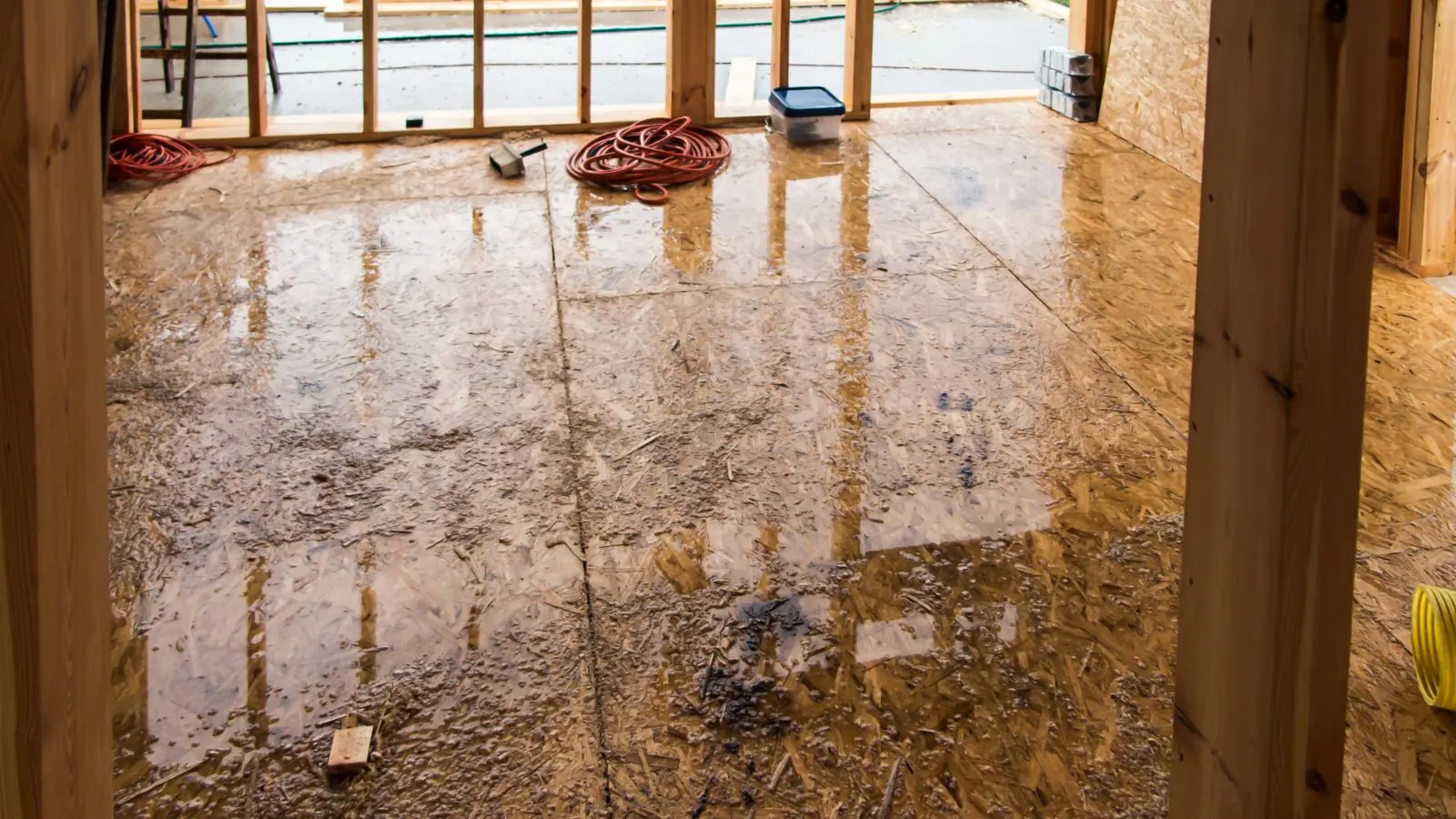
Water leaves a smell if something stays wet. People describe it as musty, earthy or like a damp towel. It is one of the most common reasons a homeowner realizes that a leak was not fully dried, and it is useful because it points to where the moisture is.
This guide explains what usually causes the smell and how to track it down. Health questions belong with a physician, and nothing here is health advice.
What the smell usually means
A musty smell usually means a material is holding moisture and something is growing or decaying on it. That might be carpet pad, drywall paper, wood framing or insulation. The smell can come from a spot you cannot see, such as the inside of a wall or the underside of a floor.
A smell is not proof of mold, though it is a reason to look. An inspection or a moisture reading finds the answer.
Where to look first
Under carpet and pad
Lift a corner in a closet to look and smell. See carpet water damage restoration.
Baseboards and wall bases
Water wicks up the wall from the floor.
Cabinet bases and under sinks
Slow leaks keep these damp. See kitchen water damage restoration.
Crawl spaces and basements
Humidity from below moves up through the floor. See crawl space water damage.
Smell will not go away?
Call and describe it.
How to track the smell down
- Smell at floor level and at ceiling level, since the source may be above or below.
- Check the room that was wet first, then rooms that share a wall.
- Look for stains, soft spots and warped boards.
- Use a moisture meter if you have one, or ask for readings.
- Run a dehumidifier and see if the smell fades, which suggests humidity rather than a wet material.
Why air fresheners and cleaners do not fix it
Covering the smell hides it for a day. Cleaning the surface does not reach moisture inside a wall or under a floor. Only drying the source and removing materials that cannot dry stops the smell.
EPA guidance sets a one-to-two-day window for drying wet materials. If a smell shows up days later, a material probably missed that window and needs a second look.
When the smell points to something more serious
A sharp or sewer-like odor can point to a drain or sewage problem rather than damp. Do not ignore it. See sewage cleanup. A musty smell that follows a long, unfixed leak may need mold remediation. See mold remediation.
A simple room-by-room smell test
Walk through the house when it has been closed for a few hours, such as in the morning. Stand in each room and breathe normally, then crouch near the floor and near baseboards. A smell that is stronger at the floor often points to carpet, pad or a wall base. A smell near a closet door may point to the wall behind it.
Write down where it is strongest and when it changes. Notes like worse after rain or worse in the morning help a crew decide where to take readings.
What a crew does to find the source
A crew starts with moisture readings across the affected rooms, then uses a thermal camera to look for cool spots that suggest wet material. If readings are high behind a wall, a small opening at the base lets them see and measure inside. They check cabinets, crawl spaces and ceilings below wet rooms.
The goal is to find what is still wet. Once found, the material is dried or removed, and the smell usually follows. See dehumidification and drying.
Smells that need quicker action
Some odors are more urgent than a musty one. A sewer smell, a chemical smell or any smell that comes with visible water or a hissing sound is worth an immediate call. If you smell gas, leave the house and call the gas utility from outside. Water damage can wait a few minutes, but safety cannot.
For musty smells without those signs, a day or two of looking is reasonable. Do not wait weeks, since a material that stays wet only gets worse.
What to tell a crew when you call
- Where the smell is strongest and when it started.
- What water event came before it.
- Whether the area has been dried and how.
- Whether the smell changes with humidity or weather.
These details help the crew decide where to take readings first and save time on site.
Do not wait for the smell to fade
A smell that is slowly fading is not always a sign of recovery. Sometimes the surface has dried while the material behind it is still wet. Take a reading before you assume the problem is over.
Questions and Answers
Why does the smell get worse on humid days?
Damp materials give off more odor when the air is humid. A dehumidifier can help narrow it down.
Will the smell go away by itself?
Usually not while the moisture is there. It fades when the source dries or is removed.
Does a musty smell mean I have mold?
It can, but it is not proof. A reading or an inspection gives a real answer.
Do Mentor homes get more musty smells after storms?
There is no local figure to cite here, and any house that takes in water and stays damp can develop one.
A Mentor reminder about humidity
Mentor sits on Lake Erie, and many basements here stay cool and damp in humid weather. A basement that stays damp can smell even without a leak. Aim for indoor humidity below 60 percent, as EPA guidance suggests, and closer to 30 to 50 percent if you can.
A basic hygrometer shows where your house is. If humidity is fine and the smell remains, look for a wet material.