

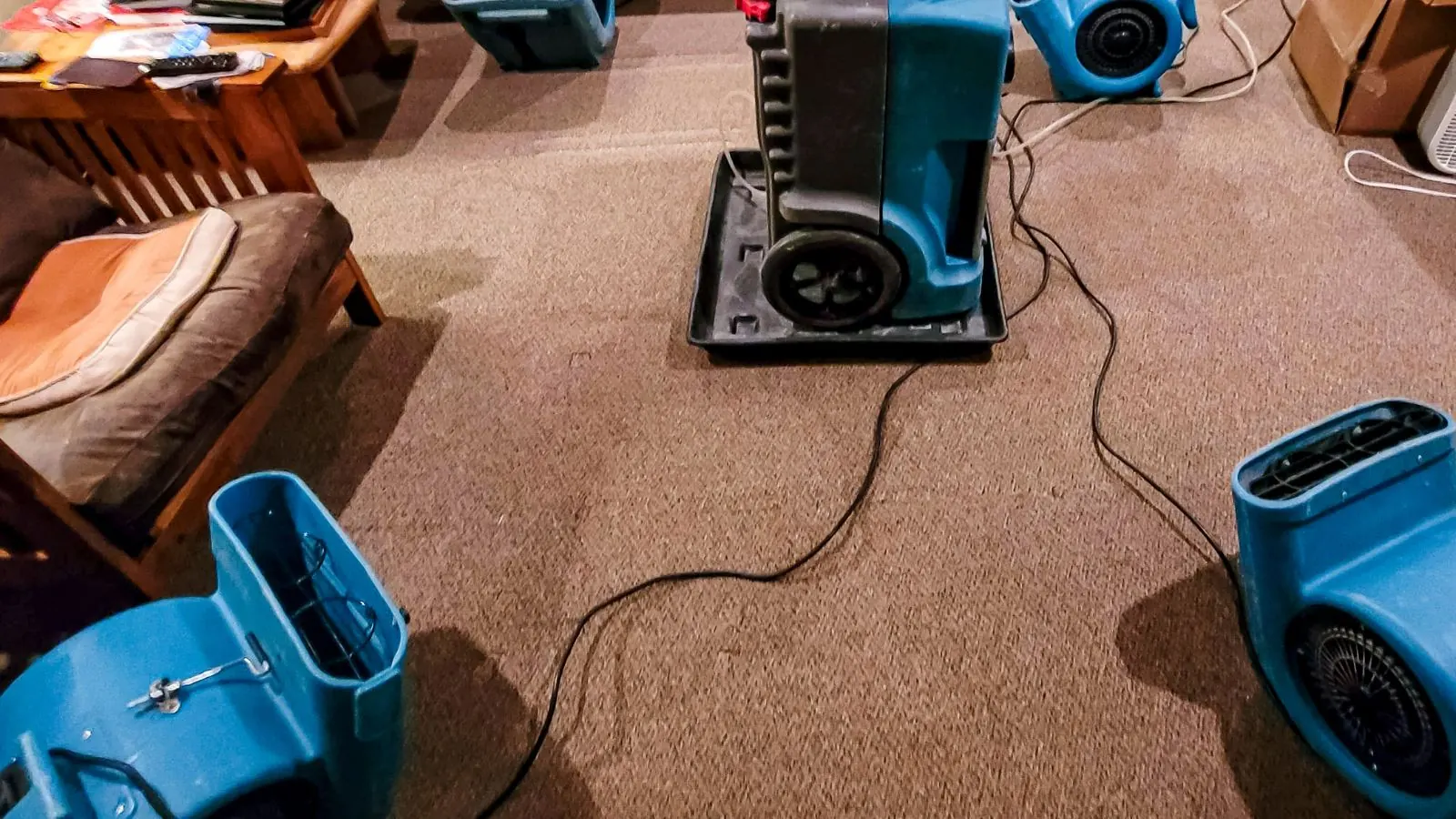
Water damage in a rental raises questions that a single-family owner never faces. Who should call? Who pays? What about the tenant's belongings? The answers depend on the lease, the cause of the water and Ohio law, and this guide is general information, not legal advice. A tenant advocacy group or an attorney can answer questions about a specific case.
The practical part is simple. Water does damage quickly, so the first steps should not wait for a dispute to be settled. Stop the source, protect belongings, document everything and tell the other party in writing.
What a tenant should do first
- Shut off the water if it is a pipe, and keep clear of wet wiring.
- Move belongings out of the wet area.
- Take photos and video of the water and the damage.
- Tell the landlord or property manager right away, in writing, with the date.
- Keep copies of every message.
- Call the rental insurer if you have renters coverage.
What a landlord should do first
- Respond quickly and put the response in writing.
- Stop the source or send a plumber.
- Bring in a restoration crew to begin drying.
- Notify the building insurer if the loss is large.
- Keep records of dates, calls and costs.
- Tell tenants what to expect and when.
Water in your unit?
Call the 24/7 line.
Who is responsible for what
| Item | Usually the landlord | Usually the tenant's own policy |
|---|---|---|
| Building structure and fixtures | Yes | No |
| Plumbing and appliances supplied by the landlord | Yes | No |
| Tenant belongings | No | Yes, if renters coverage exists |
| Temporary housing | Depends on the lease | Sometimes under renters coverage |
What Ohio law says about landlord duties
Ohio Revised Code 5321.04 lists duties of a landlord. Among them are complying with building, housing, health and safety codes, making repairs needed to keep the unit fit and habitable and keeping plumbing and other facilities in good working order. The statute is the starting point for questions about repair duties.
It does not answer every situation, and it does not decide what an insurer will pay. For a dispute, talk to a tenant advocacy group or an attorney.
Mold in a rental after a leak
Mold grows where moisture stays, and a leak that is not dried can lead to it. Tenants should report water problems early and in writing, and landlords should dry the area quickly. See remediation for mold after leaks for how removal works after water damage.
If the unit is not livable, ask the landlord in writing about alternative housing and keep receipts for any costs.
Why documentation protects both sides
A dated photo and a written message beat any later argument about what happened. Landlords benefit from showing a prompt response, and tenants benefit from showing prompt notice. Restoration records such as moisture readings and equipment logs are useful to both. See daily moisture-reading drying.
A sample timeline for a rental leak
| When | Tenant | Landlord |
|---|---|---|
| Within the hour | Stops the source if safe, photographs, tells landlord in writing | Responds and sends help |
| Same evening | Moves belongings, calls renters insurer if any | Calls plumber and restoration company |
| Next days | Keeps records and receipts | Manages drying, repairs and updates |
| After drying | Checks for lingering odor or stains | Rebuilds and confirms with tenant |
Belongings, receipts and what to keep
Tenants should photograph damaged belongings before discarding anything, and keep a list with approximate values. Receipts for emergency costs such as a hotel stay or a laundromat visit go in the same folder. If you have renters coverage, tell your insurer early.
Landlords should keep receipts for plumbing, drying and repair, along with the moisture readings and the equipment log. If a dispute comes later, those records matter more than memory.
Cooperation costs less than a dispute
Water damage is stressful, and it is easy for tenants and landlords to blame each other. The facts are usually simpler than the argument. Something failed, water spread and now it needs drying. If both sides focus on stopping the water and documenting the damage, the rest of the conversation tends to be more civil.
Where a landlord is slow, a tenant can still protect themselves by documenting, notifying in writing and keeping the damage from growing. Where a tenant is slow to report, a landlord can still respond quickly once told. Both habits cost little and save a lot.
Common questions tenants ask
Tenants often ask whether they can withhold rent or break a lease after water damage. Those are legal questions with specific rules, and the answer depends on the facts. Contact a tenant advocacy group or an attorney before taking either step.
Keep communication in writing
Phone calls are easy to forget. Follow up every call with a short message that says what was discussed, so there is a record. Both sides benefit from a clear paper trail if questions come up later.
Questions and Answers
Can a tenant call a restoration company directly?
In an emergency a tenant can call to stop damage, but the landlord should be told at once, in writing. Authorization for repair work is usually the landlord's.
Does the landlord's insurance cover my belongings?
Usually not. Renters coverage is separate and covers your own items.
What if the landlord does not respond?
Keep records and ask a tenant advocacy group or an attorney about the next step.
Does this apply to rentals in Mentor?
Ohio law applies statewide, and city housing codes may also apply. Local housing rules may also apply, and the city building office can point you to them.
Mentor context for rental water damage
Rentals range from apartments to single-family homes, and water losses in multi-unit buildings often involve more than one household. A leak from one unit can wet the ceiling of the unit below, so notice and coordination matter.
For ceiling losses, see ceiling water damage repair. For appliance leaks, see what to do about appliance leaks.