

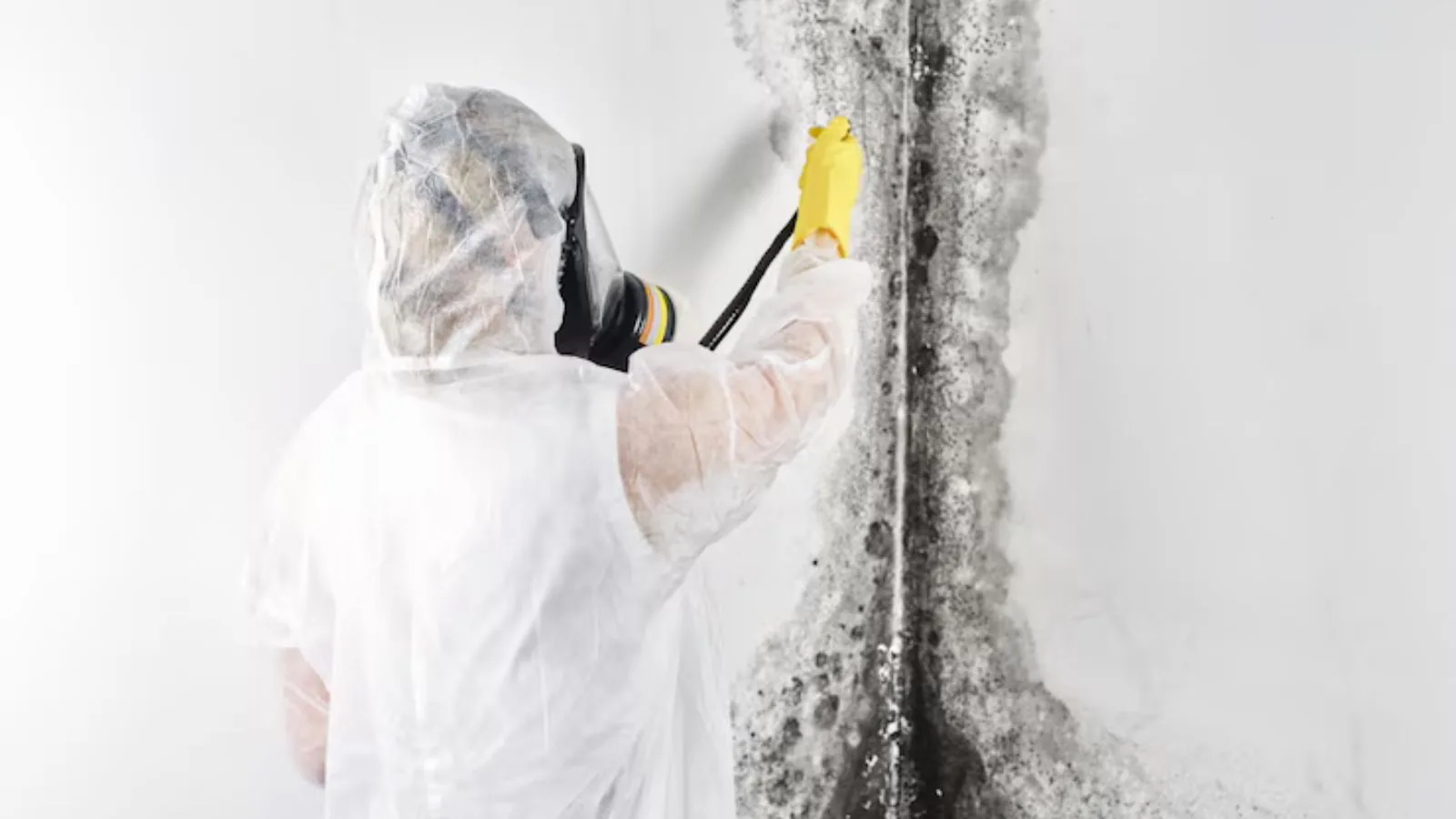
Mold is a fungus that grows on organic material when moisture is present. In a house, that means drywall paper, wood, carpet pad, insulation facing and anything else that stays damp. This guide looks at what it does to the building itself. For health questions, ask a physician.
Mentor has a humid lakeshore climate and a lot of finished basements, so moisture problems come up. The aim here is practical. Know what mold does to each material, know what stops it, and know when to call someone.
What mold needs
Mold needs moisture, an organic food source and a suitable temperature. A house has plenty of food and temperature, so moisture is the control. The EPA notes that wet materials can host growth within a day or two, and that controlling moisture is the key to controlling mold.
What it does to each material
| Material | What mold does | Usual outcome |
|---|---|---|
| Drywall | Stains the paper and softens the gypsum | Cut out and replace the affected section |
| Wood framing | Stains the surface and may soften it over time | Clean and dry, replace if soft |
| Carpet and pad | Grows in the pad and gives off odor | Remove and replace the pad |
| Insulation | Grows on facing and holds moisture | Remove and replace |
| Hard surfaces | Grows on surface film | Clean and dry |
Spots on a wall after water?
Call and describe them.
Why it keeps coming back
Cleaning off visible growth without drying the area is like mopping with the tap open. The moisture is still there, and the growth returns. Fixing the source and drying fully are the steps that matter, and the cleaning follows.
See mold remediation for how containment, removal and clearance work after water damage.
Where it hides in a Mentor house
- Behind finished basement walls.
- Under sinks and behind dishwashers.
- On the back of carpet after a leak.
- In attic insulation under a roof leak.
- Inside walls near a tub or shower.
What stops it
Dry the area fast, control indoor humidity and fix leaks. The EPA advises keeping indoor humidity below 60 percent, and ideally between 30 and 50 percent. A basic hygrometer shows where you are. Direct gutters and downspouts away from the house and keep an eye on basement corners after heavy rain.
See the drying stage for how drying after a leak is done.
How quickly it appears and what it looks like
Growth can begin within a day or two of a material getting wet, per EPA guidance, though it may be days or weeks before you see it. It shows as spots, fuzzy patches or discoloration, and often arrives with a musty smell. Smell is a useful hint because growth behind a wall can be hidden from view.
Stains can come from rust, dirt or water alone, so a spot is not proof of mold. An inspection answers that question. If you would like a person to talk it through, call and describe what you see.
What not to do when you find it
- Do not scrub or brush a large patch, since that can spread spores.
- Do not paint over it.
- Do not run fans through the area before it is assessed.
- Do not combine household cleaners, because some mixtures give off dangerous fumes.
- Do not ignore the moisture source.
For a small spot on a hard surface, careful cleaning may be enough. For anything bigger than that, have it assessed. The point is to treat the moisture first and the growth second.
Mold and your home's value
Visible mold or a history of it can come up in a sale. Buyers and lenders may ask about past water problems, and an inspection may flag stains or odors. Keeping paperwork for the moisture repair, the removal and any clearance test helps show the problem was handled.
If you plan to sell, a documented repair is easier to explain than an undocumented one. See mold removal after water damage for how the work and the paperwork go together.
A simple moisture checklist for homeowners
- After heavy rain, look at basement corners and window wells.
- Check under sinks and behind the dishwasher every few months.
- Look at ceilings below bathrooms and under the roof for new stains.
- Keep furniture a few inches off exterior basement walls.
- Fix any leak the day you find it.
A few minutes of looking costs far less than a wall that has to be opened later. If you find a damp spot you cannot explain, call and describe it. Early checks also make it easier to tell your insurer when a problem began.
When to call someone
Call if growth covers a large area, if it keeps returning after cleaning, if it follows a flood or sewage backup, or if you cannot find the moisture source. A professional can assess the area, contain it and remove affected materials.
Questions and Answers
Does mold damage the structure of a house?
It stains and can soften organic materials over time, and the moisture that feeds it can also rot wood. Dry fast and fix the source.
Is all mold black?
No. Mold comes in many colors, so color alone does not tell you much. An inspection is the way to know.
Can I paint over mold?
Paint does not fix the moisture and the growth can return. Remove the cause first.
Do Mentor basements get mold more often?
No local rate is cited here. Wherever a basement stays damp, growth is a possibility.
A Mentor drainage note
A county conservation district study of the Marsh Creek watershed, most of which lies in Mentor, notes heavy development. Pavement and roofs send rain off fast, and that runoff can end up against foundations.
A study of a stream says little about your house, so check the drainage around your own lot. See cleanup after basement water if water gets in.